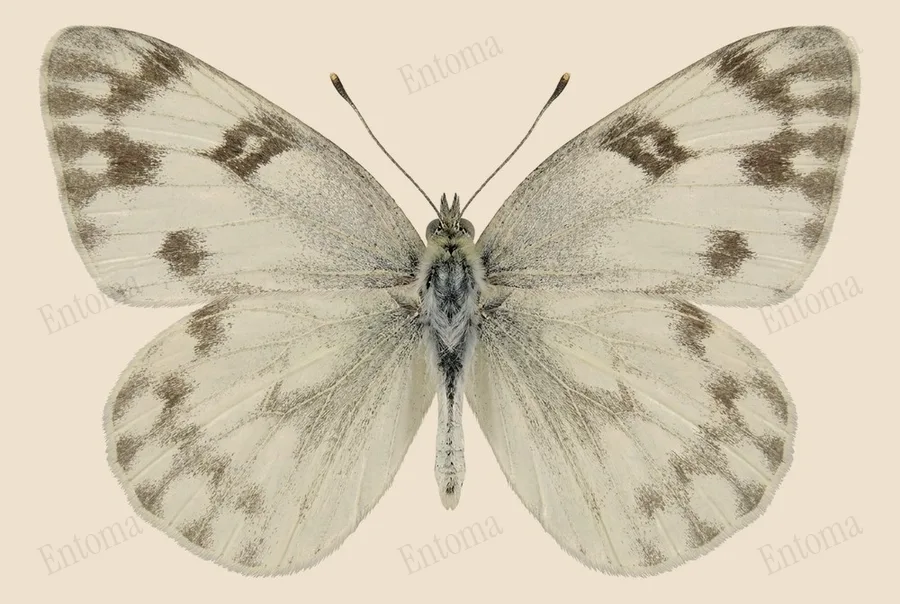
Checkered white
Checkered Whites fly fast and low over open ground, and in warm areas can produce up to four generations, the last flying as late as November.
| Where | Open fields, prairies and roadsides |
|---|---|
| Size | 32 to 57 mm wingspan |
| When | March to November |
Males are mostly white with only a few black marks near the forewing tip, while females carry heavier gray to brown checkering across both wings, broken into scattered squares rather than one solid block of color. That scattered pattern is what separates this species from the plainer Cabbage White, which has a solid dark wingtip instead.
Caterpillars feed on wild mustards such as pepperweed and shepherd's purse rather than garden cabbage, favoring the buds, flowers and developing seed pods. Adults fly low and fast over disturbed, open ground, with several generations following one another from spring into fall across most of the continent.
Traits
Habitat
Grassland
Colour
White, Black
Active
Day
To people
Harmless to people; the caterpillars feed on wild mustards and rarely trouble garden crops.
Activity through the year
Often confused with
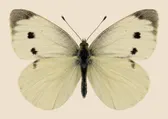
Has a solid black or gray patch at the forewing tip, while the Checkered White breaks that same area into several separate dark squares.
Questions
Is the Checkered white dangerous to people?
Harmless to people; the caterpillars feed on wild mustards and rarely trouble garden crops.
When can you see the Checkered white?
The Checkered white can be seen from March to November, by day.
Plate retouched from a photo by Peter Chen 2.0, CC BY 4.0, iNaturalist Licence
Report a mistake in this entry
Butterflies and moths›Whites and yellows›Pontia
Last updated 2026-09-26. Every entry is checked against published sources.