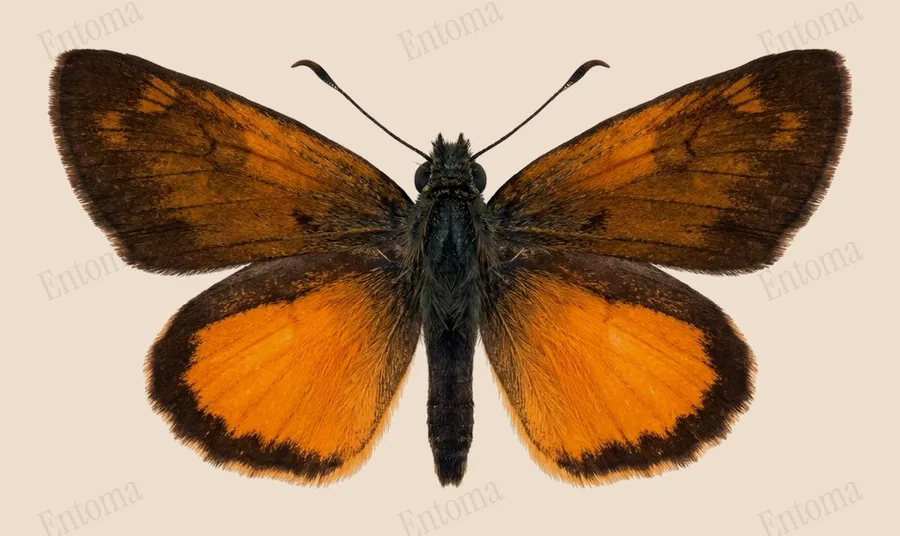
Least skipper
Among the smallest skippers in North America, this species rests with its forewings raised and hindwings spread flat, a pose unique to grass skippers.
| Where | Wet meadows, marshes and roadside ditches |
|---|---|
| Size | 19 to 26 mm wingspan |
| When | May to September |
The Least skipper is among the smallest skippers in North America, with a dark blackish brown forewing sometimes showing an orange patch and an orange hindwing broadly bordered in dark brown. It rests with forewings held up in a V and hindwings spread flat.
Caterpillars feed on grasses such as rice cutgrass and bluegrass in wet meadows, marshes and roadside ditches, while adults sip nectar from nearby low flowers. Flight is characteristically weak and low, with two to three broods produced through the warmer months.
Traits
Habitat
Wetland
Colour
Brown, Orange
Active
Day
To people
Visits low flowers for nectar; does not bite or sting people.
Activity through the year
Often confused with
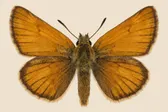
Mostly bright orange above with thin black veins and margins, unlike the Least skipper's dark blackish brown forewing and orange hindwing broadly bordered in black.
Questions
Is the Least skipper dangerous to people?
Visits low flowers for nectar; does not bite or sting people.
When can you see the Least skipper?
The Least skipper can be seen from May to September, by day.
Plate retouched from a museum specimen photo by Davidson College, CC0, GBIF Licence
Report a mistake in this entry
Butterflies and moths›Skippers›Ancyloxypha
Last updated 2026-09-26. Every entry is checked against published sources.