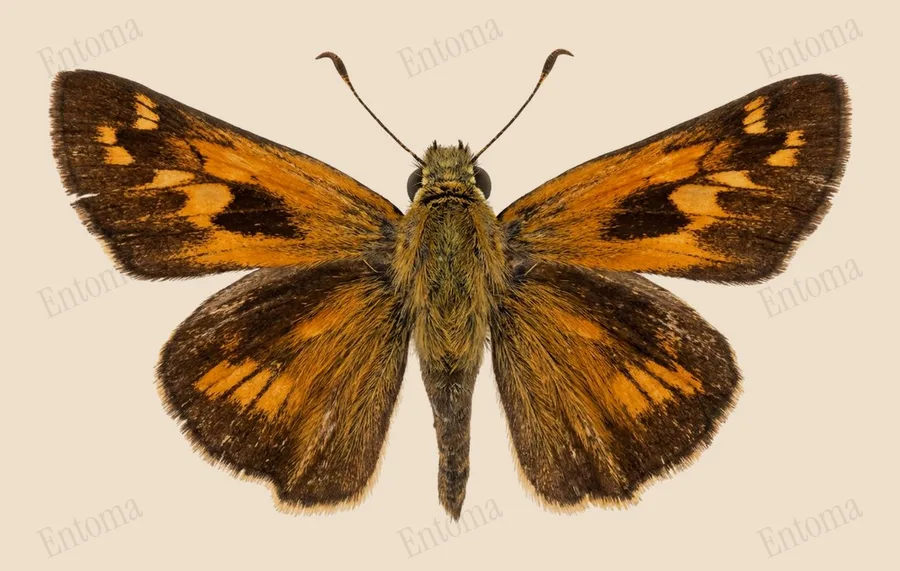
Huron skipper
This skipper was only recognized as a species separate from the western Sachem in 2022, after decades of being treated as one wide ranging butterfly.
| Where | Grasslands, fields and roadsides |
|---|---|
| Size | 25 to 38 mm wingspan |
| When | May to October |
Males are tawny orange with wide dark wing borders and a bold black stigma across the forewing, while females are darker with orange forewing edges and small glassy white spots near the tip.
Caterpillars feed on grasses, and adults stage a late summer flight that can carry them well north of their usual breeding range before cold weather ends the season.
Traits
Habitat
Grassland
Colour
Orange, Black
Active
Day
To people
Harmless to people; visits a wide range of garden and roadside flowers for nectar.
Activity through the year
Often confused with
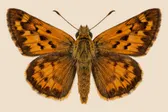
Males show jagged, saw toothed black wing borders instead of the smoother wide border of the Huron skipper, and females lack its rectangular pale forewing patch.
Questions
Is the Huron skipper dangerous to people?
Harmless to people; visits a wide range of garden and roadside flowers for nectar.
When can you see the Huron skipper?
The Huron skipper can be seen from May to October, by day.
Plate retouched from a museum specimen photo by Virginia Tech, Department of Entomology, Virginia Tech Insect Collection, CC0, GBIF Licence
Report a mistake in this entry
Butterflies and moths›Skippers›Atalopedes
Last updated 2026-09-26. Every entry is checked against published sources.