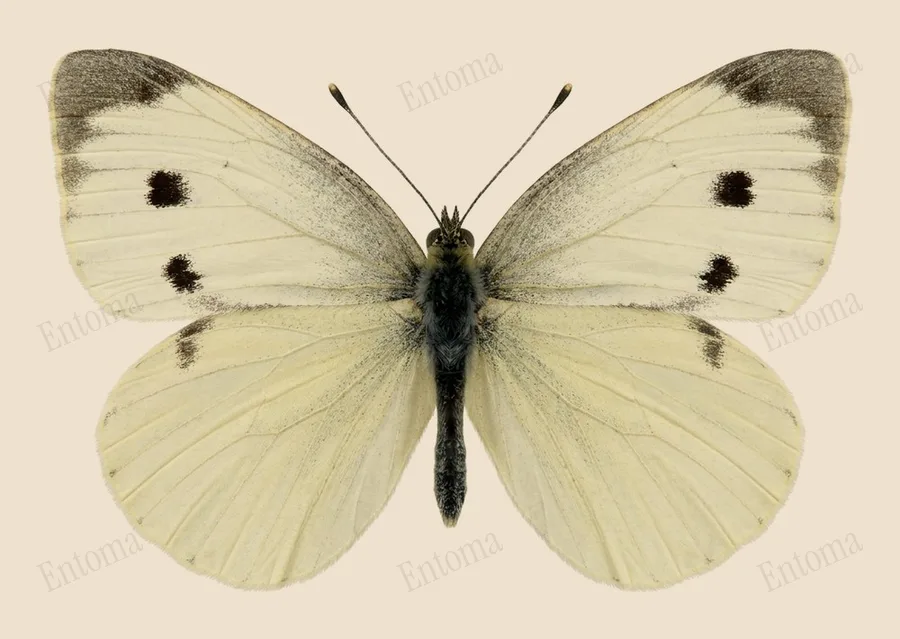
Small white
Its caterpillars are the classic cabbage-eating pest of vegetable gardens, hidden low down on leaves rather than out in the open.
| Where | Gardens, allotments, farmland, hedgerows |
|---|---|
| Size | 38 to 57 mm wingspan |
| When | April to September |
It is a white butterfly with small black wingtips, and females carry two black forewing spots while males show only one.
Several generations fly through the warmer months, and numbers can build rapidly on brassica crops if left unchecked.
Females lay their eggs on cultivated cabbages and on wild crucifers such as charlock and hedge mustard. The butterfly looks like a smaller version of the large white, whose black wingtip patch is bigger and runs down the edge of the wing. It is common in gardens and allotments.
Traits
Habitat
Garden
Colour
White, Black
Active
Day
To people
Harmless to people; caterpillars are a common pest of brassica crops.
Activity through the year
Often confused with
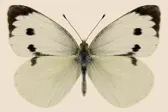
The large white is noticeably bigger with a bolder black forewing tip that extends further down the wing edge.
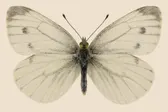
The green-veined white shows dark grey scaling along the wing veins on the underside, which the small white lacks.
Read more in the guides
Large, small or green-veined white?Questions
Is the Small white dangerous to people?
Harmless to people; caterpillars are a common pest of brassica crops.
When can you see the Small white?
The Small white can be seen from April to September, by day.
Sources butterfly-conservation.orgwildlifetrusts.orgahdb.org.uken.wikipedia.org
Plate retouched from a photo by NSG group from Lund, Sweden, CC0, Wikimedia Commons Licence
Report a mistake in this entry
Butterflies and moths›Whites and yellows›Pieris
Last updated 2026-10-17. Every entry is checked against published sources.