| How to recognise it | Caterpillars feed on | |
|---|---|---|
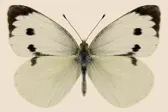
| Large white | Wingspan about 58 to 63 mm; broad black forewing tips running down the outer edge | Cabbage family, above all cabbage, Brussels sprouts and oilseed rape; nasturtium |
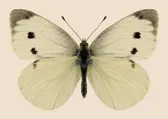
| Small white | Wingspan about 38 to 47 mm; small black forewing tips, one or two spots | Cultivated brassicas, especially cabbage; nasturtium; wild crucifers such as charlock |
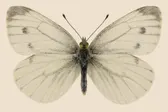
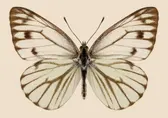
| Green-veined white | Medium sized; greenish or dusky veins, clearest under the hindwing | Wild crucifers such as garlic mustard, cuckooflower and watercress |
The large white
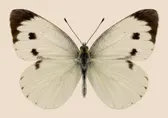
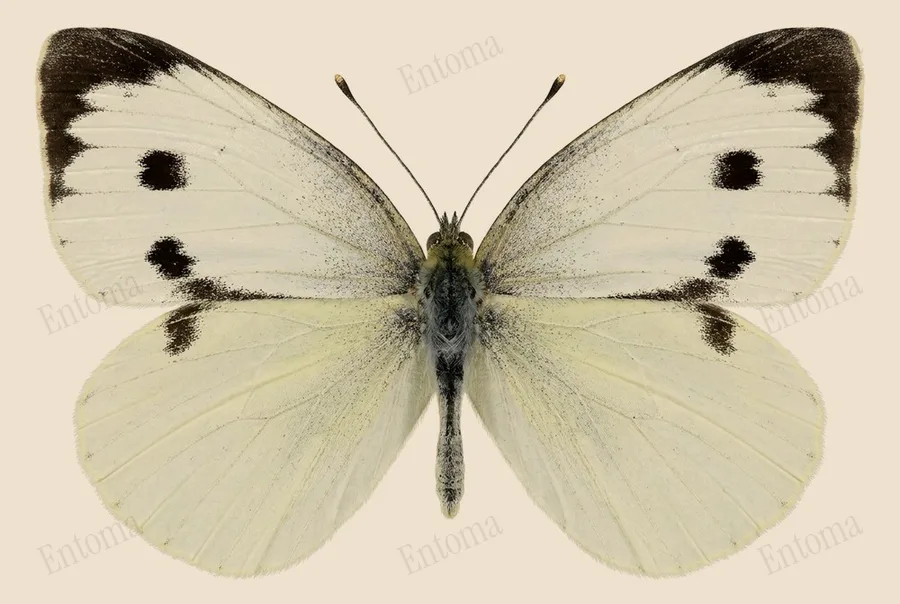
The large white is the biggest of the three, with a wingspan of roughly 58 to 63 mm. Its black forewing tips are broad and run down the outer edge of the wing. Females carry two black spots on each forewing, which males lack on the upper side.
Its caterpillars are black and yellow and feed together in groups. They eat plants of the cabbage family and strongly prefer cultivated cabbage, Brussels sprouts and oilseed rape, and they also use nasturtium. In most years local populations are topped up by migrants.
The small white
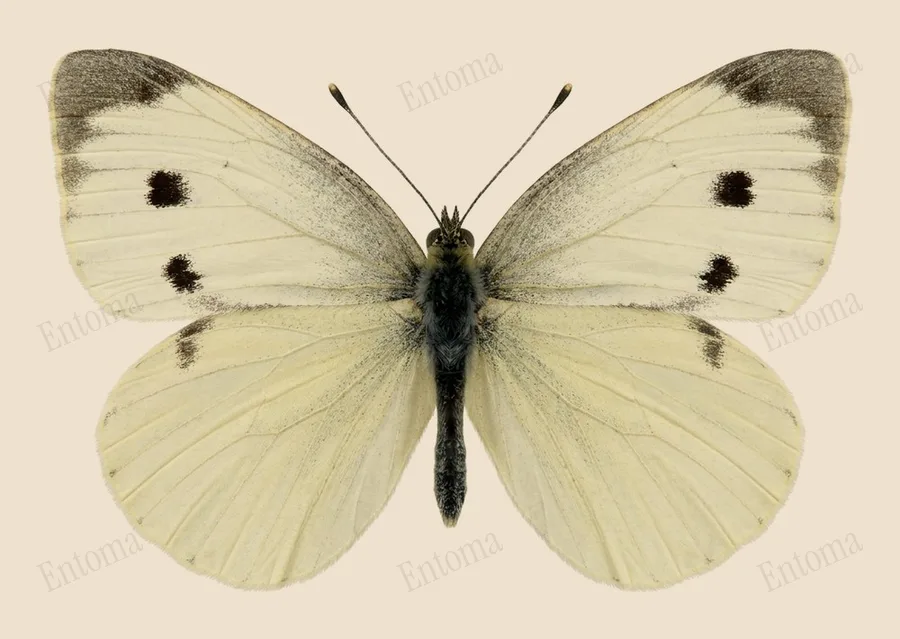
The small white has a wingspan of roughly 38 to 47 mm. Its black forewing tips are small, and it has one spot on each forewing in the male and two in the female.
Its caterpillars are green and usually live on their own rather than in groups. They feed on cultivated brassicas, cabbage above all, on nasturtium and on wild crucifers such as charlock. There are two or three broods a year, so adults fly from spring to early autumn.
The green-veined white
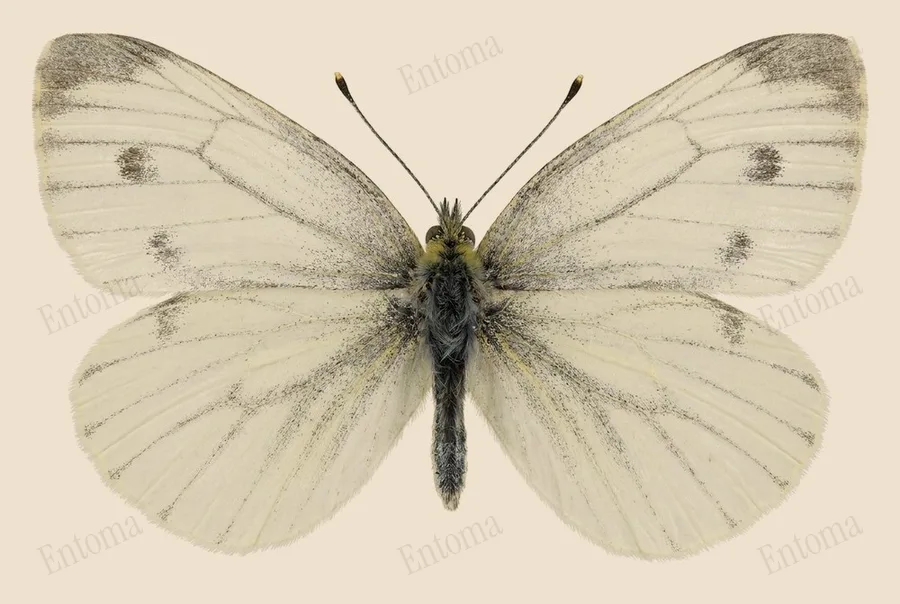
The green-veined white is medium sized, and its name gives it away: the veins are greenish or dusky, most clearly on the underside of the hindwing.
It is not a pest of cabbage crops. It breeds on wild crucifers such as garlic mustard, cuckooflower and watercress, and it prefers damp, lush places such as hedgerows, ditches, riverbanks and wet meadows.
Which one is on my cabbages?
Large and small whites turn up in many habitats, and particularly in gardens and allotments where cabbages are grown. A cluster of black and yellow caterpillars points to the large white; single green caterpillars point to the small white.