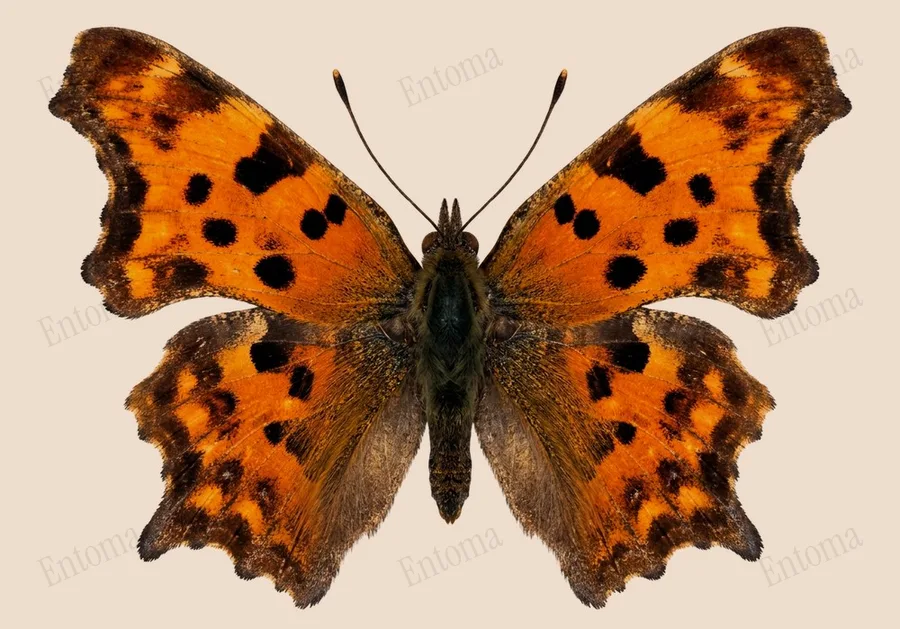
Eastern comma
The Eastern comma changes look with the seasons: summer adults have solid black hindwings, while the fall generation that overwinters turns a richer reddish orange instead.
| Where | Deciduous woodlands and wooded streamsides |
|---|---|
| Size | 38 to 64 mm wingspan |
| When | March to October |
The Eastern comma is an orange and black butterfly with ragged, deeply scalloped wing edges. The underside of the hindwing carries a small silvery mark shaped like a comma with two blunt, thickened ends, which gives the species its name and separates it from the similar question mark.
Caterpillars feed on nettles, elms and hop vines, and adults overwinter in bark crevices or leaf litter, emerging to fly again on warm days even in late winter. They rarely visit flowers, preferring tree sap, rotting fruit, mud and animal droppings instead.
Traits
Habitat
Woodland
Colour
Orange, Black
Active
Day
To people
Visits sap and rotting fruit more than flowers; harmless to people.
Activity through the year
Often confused with
The question mark shows a tiny silvery dot beneath the comma shaped mark on the hindwing underside that the Eastern comma lacks, and its forewing tip is more sharply hooked.
Questions
Is the Eastern comma dangerous to people?
Visits sap and rotting fruit more than flowers; harmless to people.
When can you see the Eastern comma?
The Eastern comma can be seen from March to October, by day.
Plate retouched from a museum specimen photo by Virginia Tech, Department of Entomology, Virginia Tech Insect Collection, CC0, GBIF Licence
Report a mistake in this entry
Butterflies and moths›Brush-footed butterflies›Polygonia
Last updated 2026-09-26. Every entry is checked against published sources.