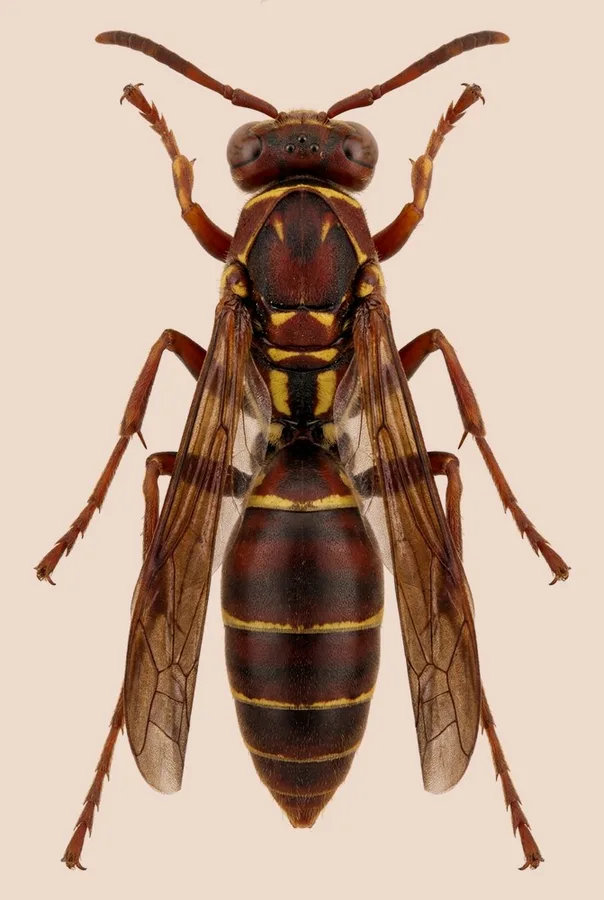
Northern paper wasp
This wasp can recognize the individual faces of its nestmates by their unique color patterns, one of the few insects known to identify individuals this way.
| Where | Gardens, woodlands and near buildings |
|---|---|
| Size | 15 to 22 mm body length |
| When | April to October |
The northern paper wasp is slender and brown with yellow legs and reddish cinnamon markings on the abdomen. A single queen founds each open, umbrella-shaped nest built from a single layer of paper cells, often tucked under eaves or overhangs.
Females can sting repeatedly and become more defensive as their nest grows, though colonies usually warn intruders by flying at them before stinging. Individual wasps recognize nestmates by their variable facial color patterns, and the colony dies off each fall except for young queens that survive to found new nests.
Traits
Habitat
Garden
Colour
Brown, Yellow
Active
Day
To people
Take care
Can sting when its nest is disturbed and the sting is painful, though it usually warns intruders by flying at them first.
Activity through the year
Often confused with
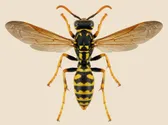
Is more strongly patterned in black and yellow with orange antennae and is often mistaken for a yellowjacket, while the northern paper wasp has yellow legs and cinnamon colored abdomen markings.
Questions
Is the Northern paper wasp dangerous to people?
Take care. Can sting when its nest is disturbed and the sting is painful, though it usually warns intruders by flying at them first.
When can you see the Northern paper wasp?
The Northern paper wasp can be seen from April to October, by day.
Plate retouched from a museum specimen photo by Davidson College, CC0, GBIF Licence
Report a mistake in this entry
Bees, wasps and ants›Potter wasps›Polistes
Last updated 2026-09-26. Every entry is checked against published sources.