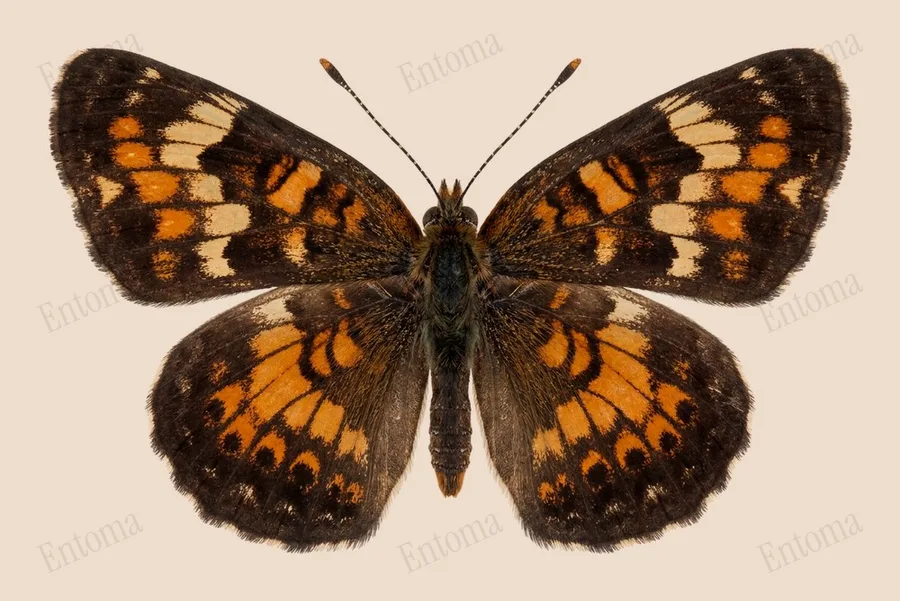
Phaon crescent
A creamy band bolts diagonally across each forewing of this small butterfly, a marking sharp enough to separate it from every similar crescent species nearby.
| Where | Damp open ground in the southern US |
|---|---|
| Size | 23 to 38 mm wingspan |
| When | February to December |
The Phaon crescent is dark orange and black above, crossed by a pale cream band on the forewing, with a cream to yellowish hindwing underside that turns gray in spring and fall individuals.
Caterpillars feed on fogfruit, and the adult butterfly flies low over the ground, rarely rising more than a few inches above open, damp, closely cropped vegetation.
Traits
Habitat
Wetland
Colour
Orange, Black, White
Active
Day
To people
Feeds on flower nectar and poses no risk to people.
Activity through the year
Often confused with
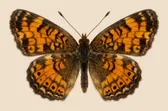
Lacks the Phaon crescent's bold cream forewing band, showing instead fine black lines crossing plain orange, with an unmarked orange-brown to gray-brown hindwing underside.
Questions
Is the Phaon crescent dangerous to people?
Feeds on flower nectar and poses no risk to people.
When can you see the Phaon crescent?
The Phaon crescent can be seen from February to December, by day.
Plate retouched from a photo by Eridan Xharahi, CC BY 4.0, iNaturalist Licence
Report a mistake in this entry
Butterflies and moths›Brush-footed butterflies›Phyciodes
Last updated 2026-09-26. Every entry is checked against published sources.