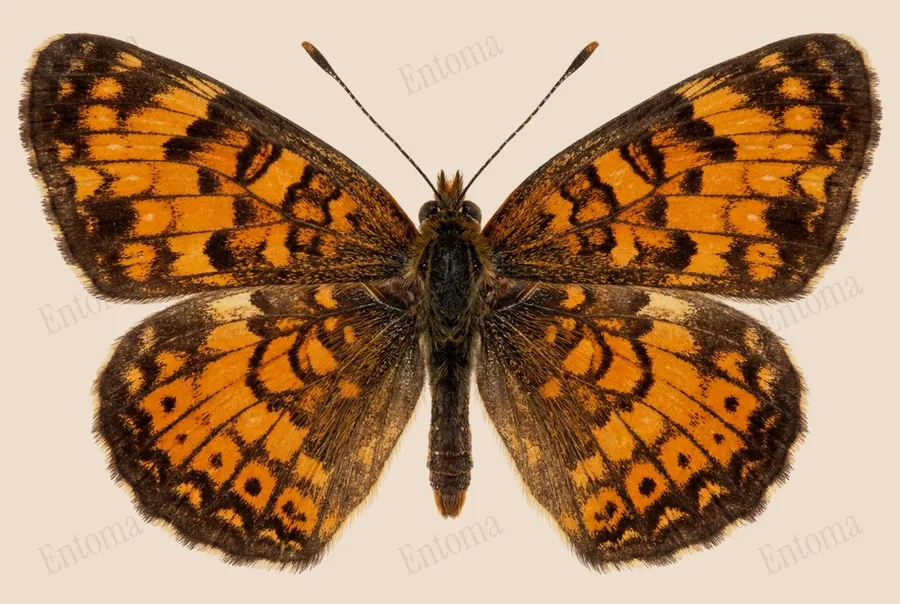
Northern crescent
The clearest way to tell this butterfly from its near-identical relative the Pearl crescent is the orange, not black and white, tip of its antenna.
| Where | Fields, meadows and woodland openings |
|---|---|
| Size | 32 to 48 mm wingspan |
| When | April to October |
The Northern crescent is a small orange and black butterfly with a crescent-shaped pale mark on the underside of the hindwing. Females tend to run larger and darker than males, and the tip of each antenna is orange rather than black and white.
Caterpillars feed on asters, and females lay their eggs in clusters on the underside of host plant leaves. Most populations fly in a single brood in summer, though partial second broods occur in parts of the range.
Traits
Habitat
Grassland
Colour
Orange, Black
Active
Day
To people
Feeds on flower nectar; harmless to people.
Activity through the year
Often confused with
Nearly identical in wing pattern, but the Pearl crescent has a black and white antenna tip rather than the plain orange tip of the Northern crescent.
Questions
Is the Northern crescent dangerous to people?
Feeds on flower nectar; harmless to people.
When can you see the Northern crescent?
The Northern crescent can be seen from April to October, by day.
Plate retouched from a photo by Sean Frey, CC BY 4.0, iNaturalist Licence
Report a mistake in this entry
Butterflies and moths›Brush-footed butterflies›Phyciodes
Last updated 2026-09-27. Every entry is checked against published sources.