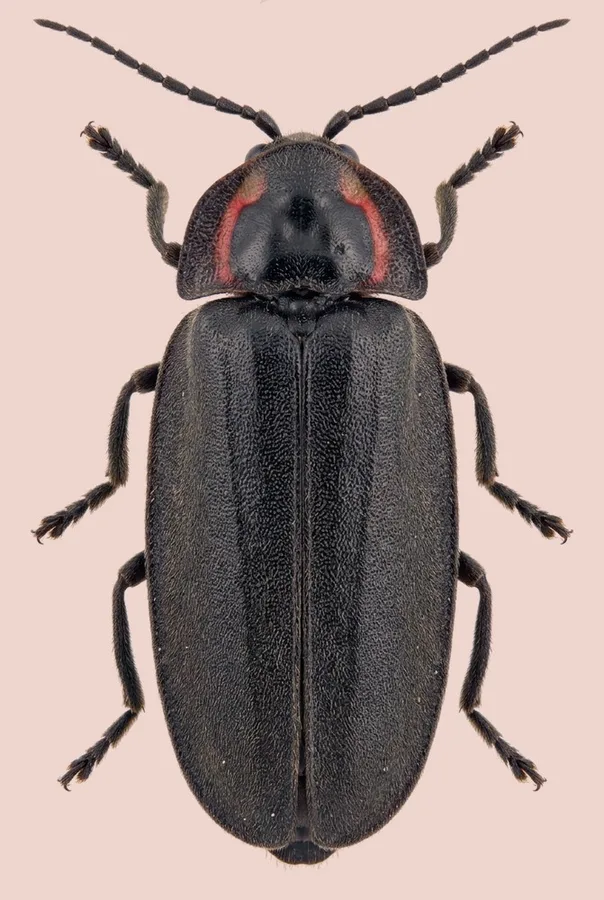
Winter firefly
This firefly is active by day and never lights up, spending the coldest months clinging motionless to tree bark instead of underground.
| Where | Hardwood trees, yards and parks |
|---|---|
| Size | 9 to 18 mm body length |
| When | March to June and August to October |
The Winter firefly is a dark, flattened beetle with fine dusty hairs on its wing covers and a shield behind the head marked with a black stripe bordered by pink and yellow patches. Unlike most fireflies, the adults have no light organ and never flash, relying instead on daytime activity and camouflage against bark.
Adults emerge in autumn and spend winter clinging to the trunks of large hardwood trees, becoming active again on mild sunny days before mating in spring. The beetles carry lucibufagins, bitter defensive compounds that make them distasteful to birds and other predators.
Traits
Habitat
Woodland
Colour
Black, Yellow, Red
Active
Day
To people
Mild
Does not sting or bite; contains bitter defensive compounds that can cause vomiting or drooling if eaten by a pet.
Activity through the year
Often confused with
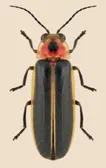
Similar in size, but the Big Dipper firefly is active at night and produces a bright yellow J-shaped flash, while the Winter firefly flies by day and never lights up.
Questions
Is the Winter firefly dangerous to people?
Mild. Does not sting or bite; contains bitter defensive compounds that can cause vomiting or drooling if eaten by a pet.
When can you see the Winter firefly?
The Winter firefly can be seen from March to June and August to October, by day.
Plate retouched from a photo by meaningful_name, CC0, iNaturalist Licence
Report a mistake in this entry
Last updated 2026-09-27. Every entry is checked against published sources.