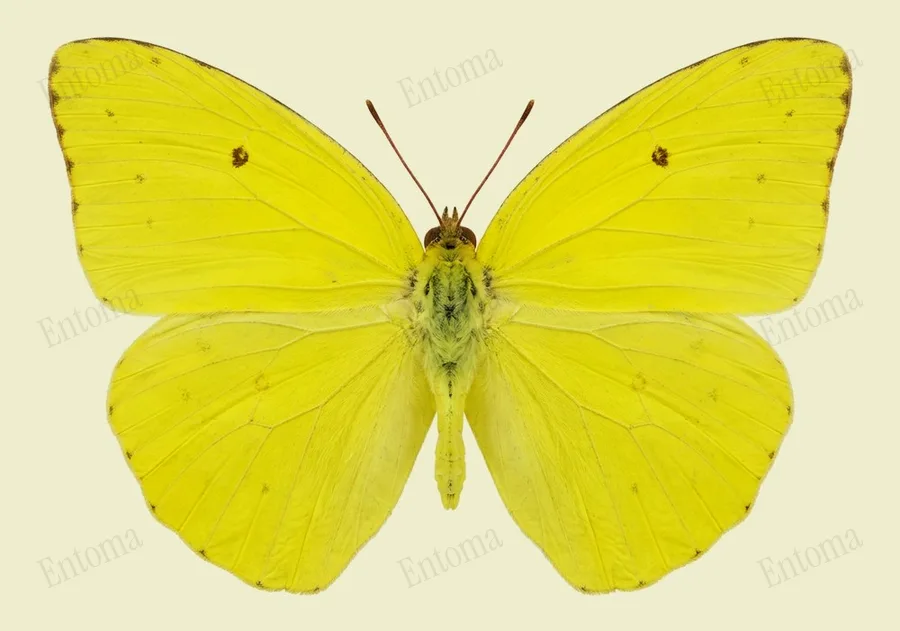
Cloudless sulphur
Each year this butterfly's generations push steadily north from Florida, then all die out with the first hard frost, so the population rebuilds from scratch every spring.
| Where | Gardens, roadsides and open fields |
|---|---|
| Size | 55 to 70 mm wingspan |
| When | March to April and July to December |
The cloudless sulphur is a large, clear yellow butterfly with elongated, rounded wings and a wingspan of about 55 to 70 mm. Males are plain yellow above, while females are paler with scattered black spots and a dark square mark on the underside of the forewing.
Caterpillars feed on sennas and other legumes and vary from yellow to green depending on whether they are eating leaves or flowers. The species cannot survive freezing winters, so each year it recolonizes the northern part of its range anew from southern populations.
Traits
Habitat
Garden
Colour
Yellow
Active
Day
To people
A common, day flying visitor to gardens and roadsides; not a risk to people and easily attracted with senna plantings.
Activity through the year
Often confused with
A closely related sulphur whose males show broad orange bars across the upper wings, a mark the cloudless sulphur always lacks.
Questions
Is the Cloudless sulphur dangerous to people?
A common, day flying visitor to gardens and roadsides; not a risk to people and easily attracted with senna plantings.
When can you see the Cloudless sulphur?
The Cloudless sulphur can be seen from March to April and July to December, by day.
Plate retouched from a museum specimen photo by University of Texas at Austin, Biodiversity Collections, CC0, GBIF Licence
Report a mistake in this entry
Butterflies and moths›Whites and yellows›Phoebis
Last updated 2026-09-26. Every entry is checked against published sources.