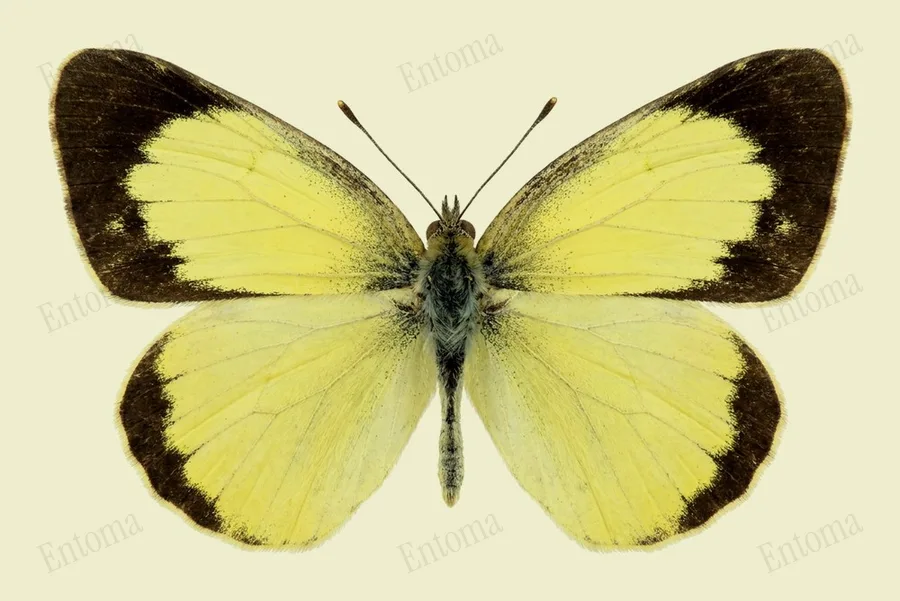
Dainty sulphur
The Dainty Sulphur is North America's smallest sulphur butterfly, with a wingspan barely reaching the width of a large coin.
| Where | Open, weedy fields and roadsides |
|---|---|
| Size | 19 to 32 mm wingspan |
| When | March to December |
This tiny butterfly is bright lemon yellow above with a black forewing tip and a dark bar along the forewing's trailing edge, features the larger Little Yellow lacks. Females show more extensive dark markings than males, and the underside turns olive-green in cooler seasons.
Caterpillars feed on low weeds such as carpetweed and pigweed rather than the legumes most sulphurs prefer. Multiple broods appear through the warmer months, and the species cannot survive cold winters, recolonizing northern areas again each year.
Traits
Habitat
Grassland
Colour
Yellow, Black
Active
Day
To people
Harmless to people; this tiny butterfly stays low over open, weedy ground.
Activity through the year
Often confused with
Has a solid black border framing the wing, rather than the separate black bars on the forewing and hindwing that mark the Dainty Sulphur.
Questions
Is the Dainty sulphur dangerous to people?
Harmless to people; this tiny butterfly stays low over open, weedy ground.
When can you see the Dainty sulphur?
The Dainty sulphur can be seen from March to December, by day.
Plate retouched from a museum specimen photo by University of Texas at Austin, Biodiversity Collections, CC0, GBIF Licence
Report a mistake in this entry
Butterflies and moths›Whites and yellows›Nathalis
Last updated 2026-09-26. Every entry is checked against published sources.