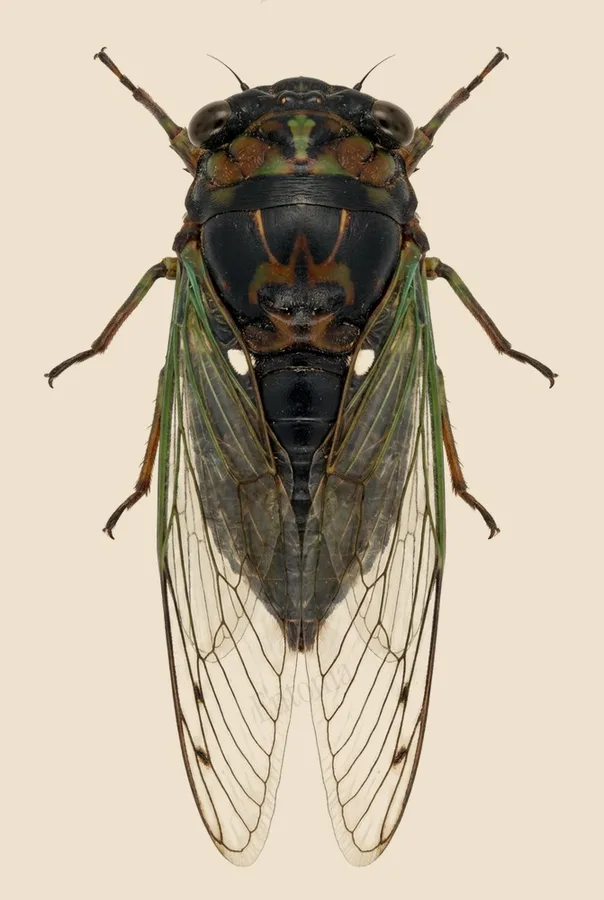
Swamp cicada
Known as the morning cicada, it must first bask in the sun to warm its body before it can begin its loud daytime calling.
| Where | Wetlands, low vegetation and open woodland |
|---|---|
| Size | 20 to 40 mm body length |
| When | June to September |
The Swamp cicada has a black, green and brown mottled body, usually with a black collar behind the head, and grows 20 to 40 mm long. A related southern form has a mostly green collar instead.
Nymphs spend years underground feeding on sap from tree roots before adults emerge from June to September, peaking in August. It often perches on low vegetation, making it the most frequently seen Neotibicen cicada in North America.
Traits
Habitat
Wetland
Colour
Black, Brown, Green
Active
Day
To people
Cannot bite or sting; adults do not even feed, spending their short lives calling and mating.
Activity through the year
Often confused with
Has a green-tinted collar and forewings that bend abruptly near the middle, while the Swamp cicada usually has a black collar and more evenly curved forewings.
Questions
Is the Swamp cicada dangerous to people?
Cannot bite or sting; adults do not even feed, spending their short lives calling and mating.
When can you see the Swamp cicada?
The Swamp cicada can be seen from June to September, by day.
Plate retouched from a photo by Dan Johnson, CC BY 4.0, iNaturalist Licence
Report a mistake in this entry
Last updated 2026-09-27. Every entry is checked against published sources.