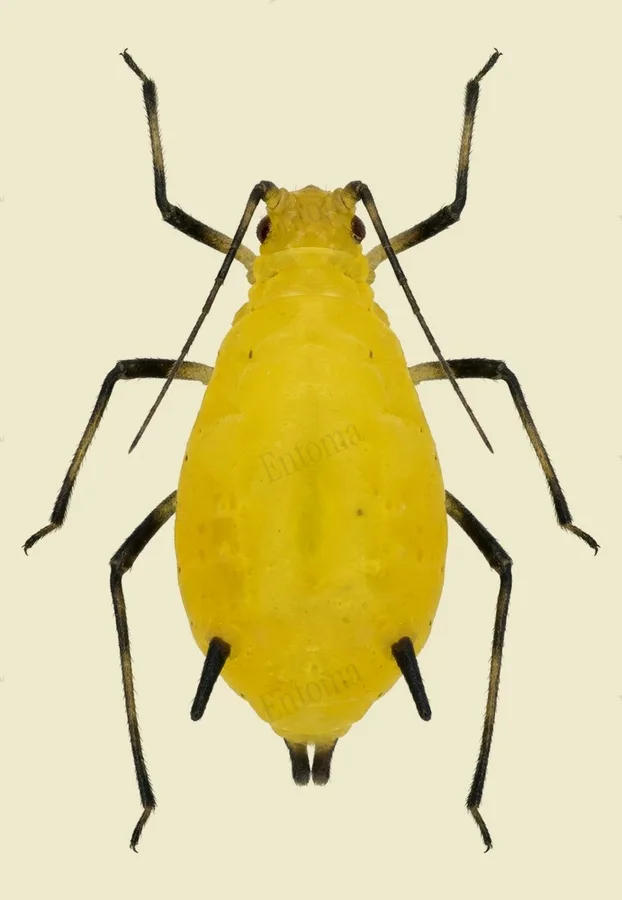
Oleander aphid
This bright yellow aphid feeds on toxic milkweed and oleander sap, then stores the plant poison in its own body to sicken any predator that eats it.
| Where | Oleander and milkweed plants continent-wide |
|---|---|
| Size | 1.5 to 2.6 mm body length |
| When | April to October |
The oleander aphid is small and evenly bright yellow to orange, with black legs, antennae, and the paired tubes on its rear end called cornicles. Colonies of winged and wingless adults often crowd densely along stems and flower buds.
Females give birth to live young without mating, so a single arrival can cover a plant in a dense colony within days, especially through the warmer months of the year.
Traits
Habitat
Garden
Colour
Yellow, Black
Active
Day
To people
Mild
Not a hazard to touch, though a predator that eats enough of these aphids can be sickened by the plant toxins they carry.
Activity through the year
Often confused with
Duller yellow-green with the hind legs pale for more than half their length, unlike the oleander aphid's evenly black legs.
Questions
Is the Oleander aphid dangerous to people?
Mild. Not a hazard to touch, though a predator that eats enough of these aphids can be sickened by the plant toxins they carry.
When can you see the Oleander aphid?
The Oleander aphid can be seen from April to October, by day.
Plate retouched from a photo by nuthatchnicole, CC BY 4.0, iNaturalist Licence
Report a mistake in this entry
Last updated 2026-09-26. Every entry is checked against published sources.