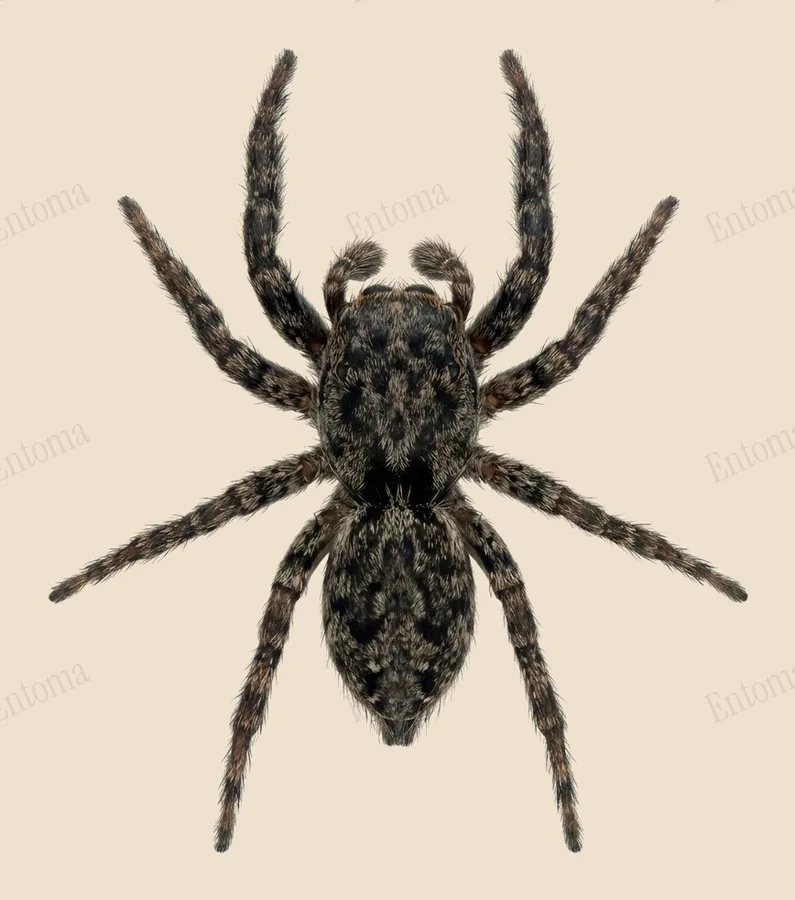
Flea jumping spider
This tiny, cryptically colored jumping spider specializes in hunting ants, tackling prey many times its own size with careful, patient stalking.
| Where | Leaf litter, tree trunks and walls |
|---|---|
| Size | Female 4.6 to 6.1 mm, male about 4 mm body length |
| When | March to September |
The flea jumping spider is tiny and cryptically colored, with a yellowish, bar-shaped mark on the abdomen and spotted, ringed legs that break up its outline. Females are slightly larger than males.
It hunts mainly ants, stalking them patiently on tree trunks, walls, grass and leaf litter before pouncing. Common in mesic hardwood forests and other woodland habitats across the eastern half of the United States and adjacent Canada, it is most often found from spring into early autumn.
Traits
Habitat
Woodland
Colour
Brown, Yellow, Grey
Active
Day and night
To people
This tiny jumping spider is far too small to bite people in any meaningful way and poses no risk around the garden or home.
Activity through the year
Often confused with
Slightly smaller at 2 to 4 mm body length and restricted to dry, sandy leaf litter, rather than the moist hardwood forest litter the flea jumping spider prefers.
Questions
Is the Flea jumping spider dangerous to people?
This tiny jumping spider is far too small to bite people in any meaningful way and poses no risk around the garden or home.
When can you see the Flea jumping spider?
The Flea jumping spider can be seen from March to September, by day and at night.
Plate retouched from a photo by Ashwin Srinivasan, CC BY 4.0, iNaturalist Licence
Report a mistake in this entry
Spiders›Jumping spiders›Naphrys
Last updated 2026-09-27. Every entry is checked against published sources.