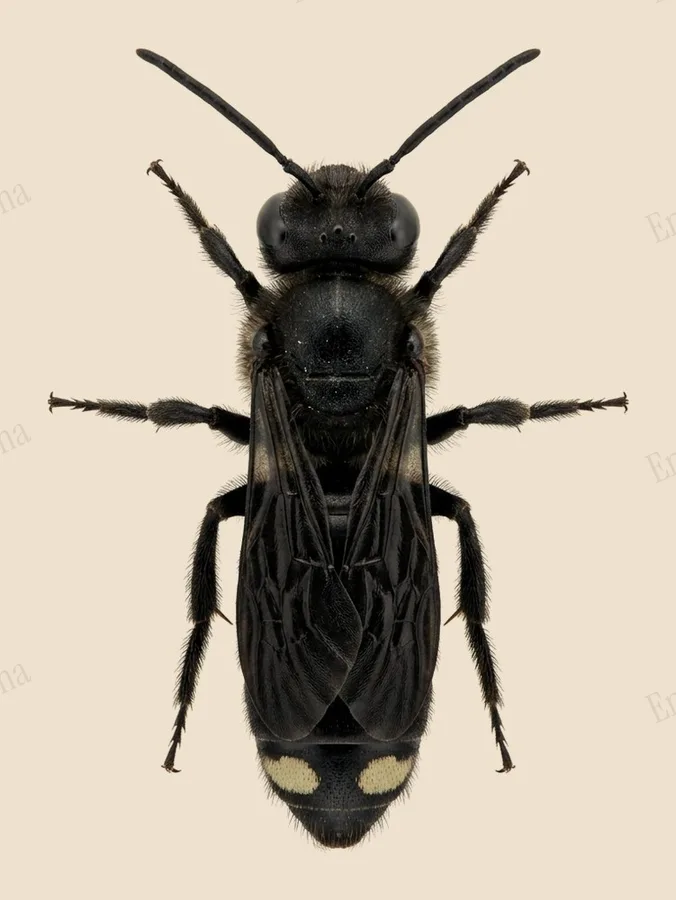
Two-spotted longhorn bee
Males of this bee have antennae about twice as long as the females, who alone carry a stinger they rarely use.
| Where | Gardens, meadows and farm fields |
|---|---|
| Size | 11 to 15 mm body length |
| When | June to August |
The two-spotted longhorn bee is a small, coal-black bee, 11 to 15 mm long, with long yellow hairs on the hind legs for carrying pollen. Females carry two pale spots near the tip of the abdomen, and males are recognized by antennae about twice the usual length.
Females dig individual nest burrows in bare or sparsely vegetated soil and stock each brood cell with pollen gathered from coneflowers, asters, sunflowers and garden vegetables. Only females carry a stinger, and this solitary bee rarely uses it, flying from June into August.
Traits
Habitat
Farmland
Colour
Black, Yellow
Active
Day
To people
Mild
Only females carry a stinger and rarely use it; this bee is docile and safe to observe closely.
Activity through the year
Often confused with
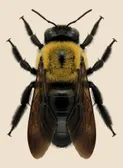
Much larger, with a shiny, hairless black abdomen, unlike the Two-spotted longhorn bee's small, densely hairy black and yellow body.
Questions
Is the Two-spotted longhorn bee dangerous to people?
Mild. Only females carry a stinger and rarely use it; this bee is docile and safe to observe closely.
When can you see the Two-spotted longhorn bee?
The Two-spotted longhorn bee can be seen from June to August, by day.
Plate retouched from a photo by Brandon Johnson, CC BY 4.0, iNaturalist Licence
Report a mistake in this entry
Bees, wasps and ants›Bees and bumblebees›Melissodes
Last updated 2026-09-27. Every entry is checked against published sources.