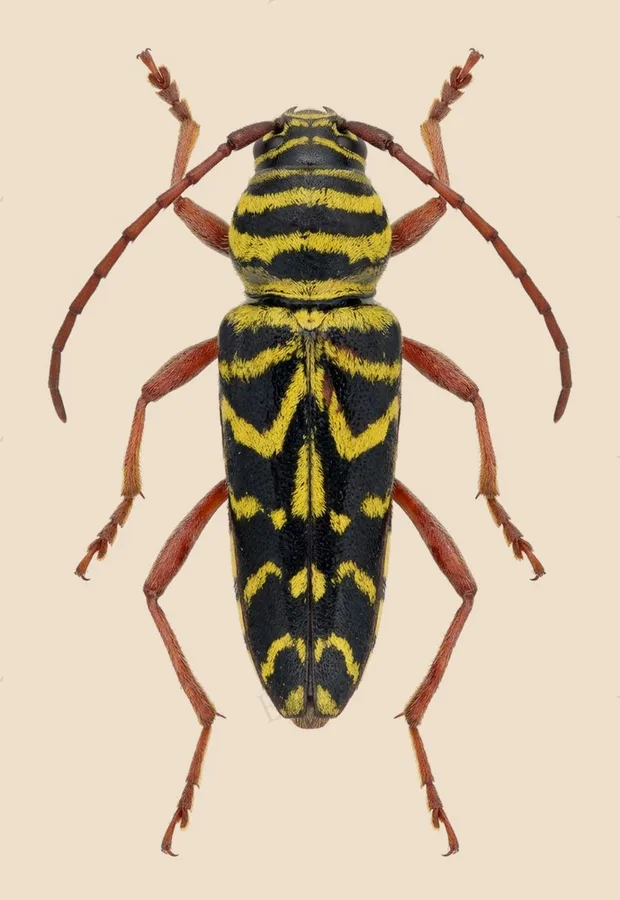
Locust borer
This black and yellow beetle mimics the look of a stinging wasp so well that it fools birds despite being completely harmless.
| Where | Black locust trees and goldenrod |
|---|---|
| Size | 11 to 28 mm body length |
| When | August to October |
The Locust borer is a black longhorn beetle crossed with narrow yellow bands, including a bold W-shaped mark across the wing covers, and reddish legs, an overall pattern that closely mimics a wasp. Adults gather on goldenrod flowers in autumn to feed on pollen.
Females lay eggs in bark crevices of black locust trees in fall, and the larvae tunnel into the wood over winter, a pattern of damage that can invite fungal decay and weaken the tree over time.
Traits
Habitat
Farmland
Colour
Black, Yellow
Active
Day
To people
Does not sting or bite; harmless to people despite its wasp-like appearance.
Activity through the year
Often confused with
Similar black and yellow banding, but the Painted hickory borer is active in spring rather than fall and develops in dead hickory and other hardwoods instead of living black locust.
Questions
Is the Locust borer dangerous to people?
Does not sting or bite; harmless to people despite its wasp-like appearance.
When can you see the Locust borer?
The Locust borer can be seen from August to October, by day.
Plate retouched from a photo by zygy, CC0, iNaturalist Licence
Report a mistake in this entry
Beetles›Longhorn beetles›Megacyllene
Last updated 2026-09-27. Every entry is checked against published sources.