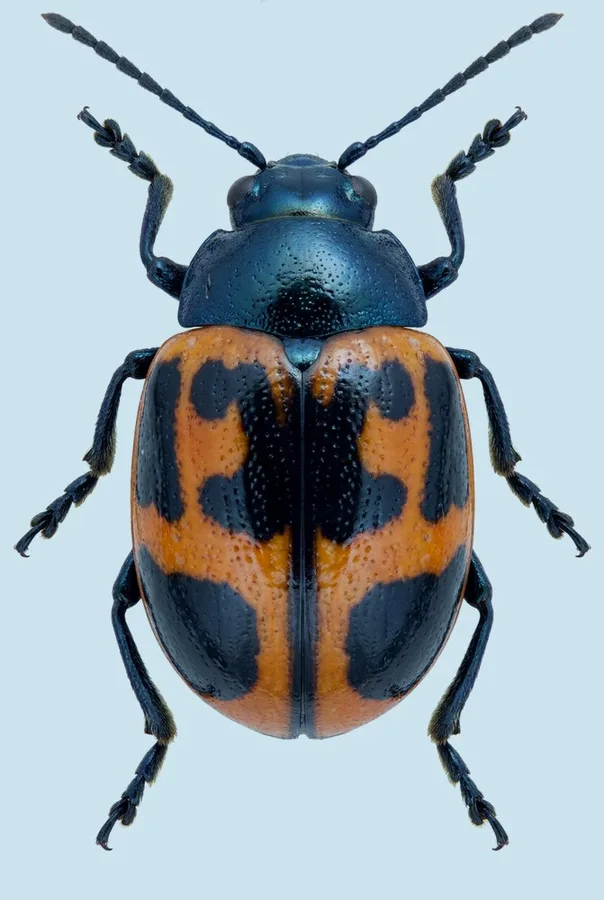
Swamp milkweed leaf beetle
This beetle drains milkweed's toxic sap through clipped veins, then stores the same poison in its own body as a warning to predators.
| Where | Milkweed patches in wetlands and meadows |
|---|---|
| Size | 11 to 13 mm body length |
| When | May to September |
The Swamp milkweed leaf beetle has an oval, robust body with a black head and pronotum and orange to yellow wing covers marked with dark blue to black patches; the exact pattern varies between individuals. Metallic blue legs complete the warning colored beetle.
Adults and larvae feed on swamp milkweed and related plants, clipping leaf veins to drain the toxic sap before eating, and they store the plant's cardenolide compounds in their own bodies as a defense against predators. Adults overwinter in leaf litter and become active again in spring.
Traits
Habitat
Wetland
Colour
Orange, Black, Metallic
Active
Day
To people
Mild
Feeds openly on milkweed in daylight; its body stores plant toxins, so it should not be eaten.
Activity through the year
Often confused with
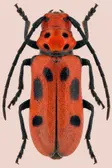
A narrow, elongated longhorn beetle that is red rather than orange, with long black antennae nearly as long as the body, unlike the Swamp milkweed leaf beetle's oval frame and short antennae.
Questions
Is the Swamp milkweed leaf beetle dangerous to people?
Mild. Feeds openly on milkweed in daylight; its body stores plant toxins, so it should not be eaten.
When can you see the Swamp milkweed leaf beetle?
The Swamp milkweed leaf beetle can be seen from May to September, by day.
Plate retouched from a photo by Healthy Yards, CC BY 4.0, iNaturalist Licence
Report a mistake in this entry
Beetles›Leaf beetles›Labidomera
Last updated 2026-09-26. Every entry is checked against published sources.