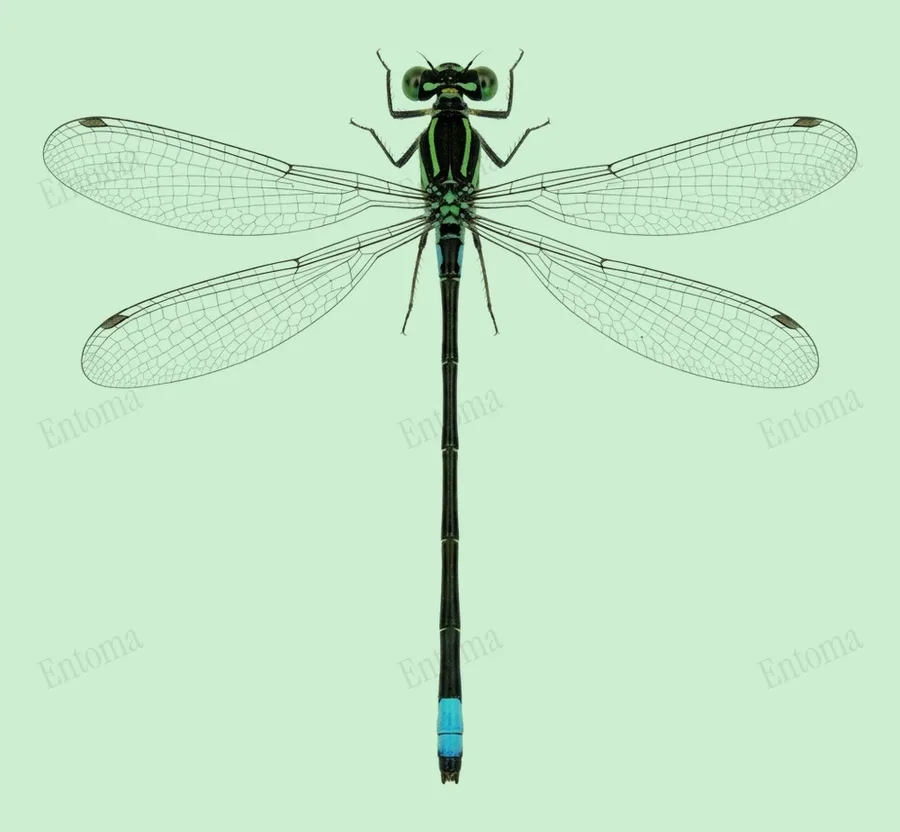
Eastern forktail
Males of this damselfly are so tiny that their bodies look almost entirely black and green until sunlight catches the bright blue tip of the abdomen.
| Where | Ponds, ditches and slow streams |
|---|---|
| Size | 22 to 30 mm body length |
| When | May to September |
The Eastern forktail is a small damselfly; males have a black thorax with green stripes and a blue tip to the abdomen, while young females are bright orange before turning powdery blue with age.
Adults perch low over ponds, ditches and slow streams from late spring through summer, and both sexes prey on small flying insects caught near the water's surface.
Traits
Habitat
Wetland
Colour
Green, Blue, Black
Active
Day
To people
Harmless to people; does not bite or sting.
Activity through the year
Often confused with
Similar size and habit, but the male Rambur's forktail has only a single blue band on the abdomen, while the Eastern forktail male has pale green shoulder stripes and a black-topped thorax.
Questions
Is the Eastern forktail dangerous to people?
Harmless to people; does not bite or sting.
When can you see the Eastern forktail?
The Eastern forktail can be seen from May to September, by day.
Plate retouched from a photo by Mila C., CC BY 4.0, iNaturalist Licence
Report a mistake in this entry
Dragonflies and damselflies›Narrow-winged damselflies›Ischnura
Last updated 2026-09-26. Every entry is checked against published sources.