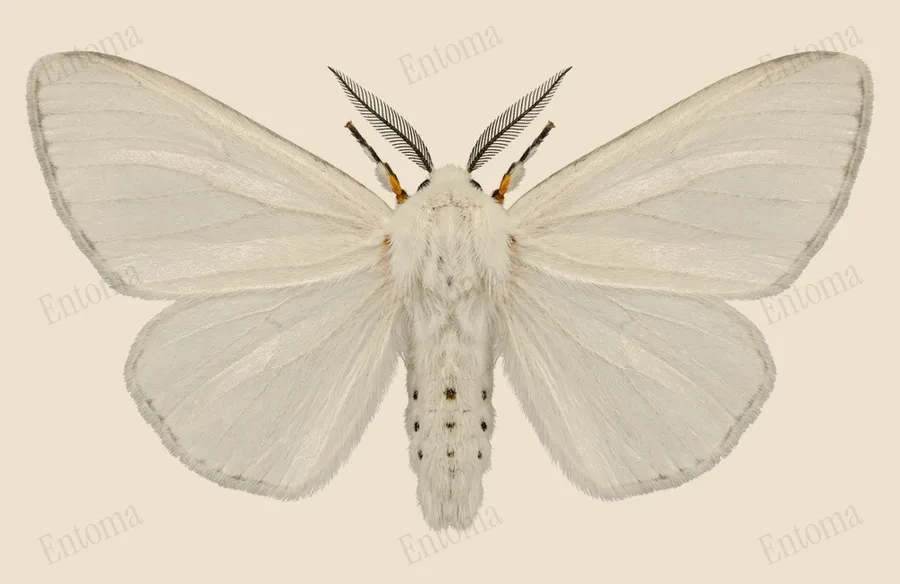
Fall webworm moth
This moth's caterpillars spin large communal silk tents over the tips of tree branches, sometimes enclosing entire limbs by late summer.
| Where | Shade trees, orchards and forest edges |
|---|---|
| Size | 25 to 50 mm wingspan |
| When | March to October |
The Fall webworm moth is white, sometimes with scattered black spots on the wings, and its pale, hairy caterpillars feed together inside a silk web spun over the ends of branches on a wide range of trees.
Populations can have one or two generations a year depending on location, with webs becoming most noticeable from midsummer into fall as the caterpillars grow and expand their tent to reach fresh leaves.
Traits
Habitat
Woodland
Colour
White, Black
Active
Night
To people
Mild
The fine bristles on the caterpillars can mildly irritate skin if handled, though the moth does not sting or bite.
Activity through the year
Often confused with
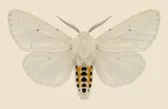
Similar white wings, but the Virginian tiger moth has a yellow and black spotted abdomen and two black dots near each wing base, while the fall webworm moth's abdomen is plain white.
Questions
Is the Fall webworm moth dangerous to people?
Mild. The fine bristles on the caterpillars can mildly irritate skin if handled, though the moth does not sting or bite.
When can you see the Fall webworm moth?
The Fall webworm moth can be seen from March to October, at night.
Plate retouched from a museum specimen photo by AJ Thomas, Colorado State University, C.P. Gillette Museum of Arthropod Diversity, CC0, GBIF Licence
Report a mistake in this entry
Butterflies and moths›Erebid moths›Hyphantria
Last updated 2026-09-26. Every entry is checked against published sources.