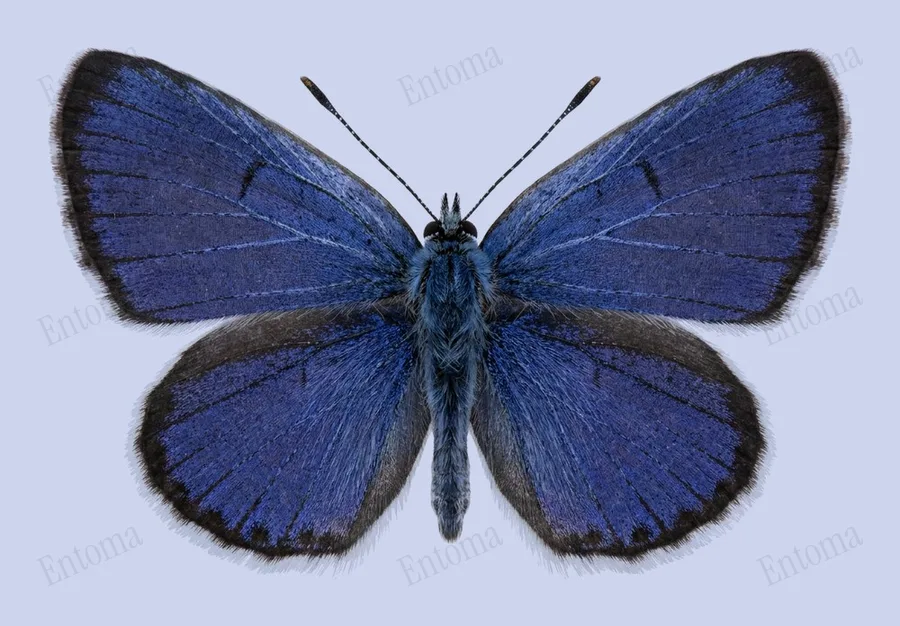
Ceraunus blue
One of the smallest blues in North America, this butterfly can fly in every month of the year across the warmest parts of its range.
| Where | Open scrub, dunes and roadsides |
|---|---|
| Size | 20 to 30 mm wingspan |
| When | April to January |
The Ceraunus blue is a small butterfly with lavender blue upperwings bordered in narrow black on males, while females show more brown with limited blue at the wing base. The gray underside carries dark bars and a single black eyespot rimmed with orange near the hindwing margin, a mark that separates it from the two-eyespot Cassius blue.
Caterpillars feed on the flowers and seed pods of low legumes such as partridge pea and rosary pea, chewing into buds rather than leaves. Because generations overlap through the warm season, adults of this species can be found on the wing at the same time as several other broods.
Traits
Habitat
Grassland
Colour
Blue, Grey
Active
Day
To people
Feeds only on nectar and plant sap; harmless to people.
Activity through the year
Often confused with
Similar in size and overall color, but the Cassius blue shows two dark eyespots near the hindwing margin on its underside, where the Ceraunus blue shows only one.
Questions
Is the Ceraunus blue dangerous to people?
Feeds only on nectar and plant sap; harmless to people.
When can you see the Ceraunus blue?
The Ceraunus blue can be seen from April to January, by day.
Plate retouched from a photo by smeckert, CC BY 4.0, iNaturalist Licence
Report a mistake in this entry
Butterflies and moths›Blues and coppers›Hemiargus
Last updated 2026-09-27. Every entry is checked against published sources.