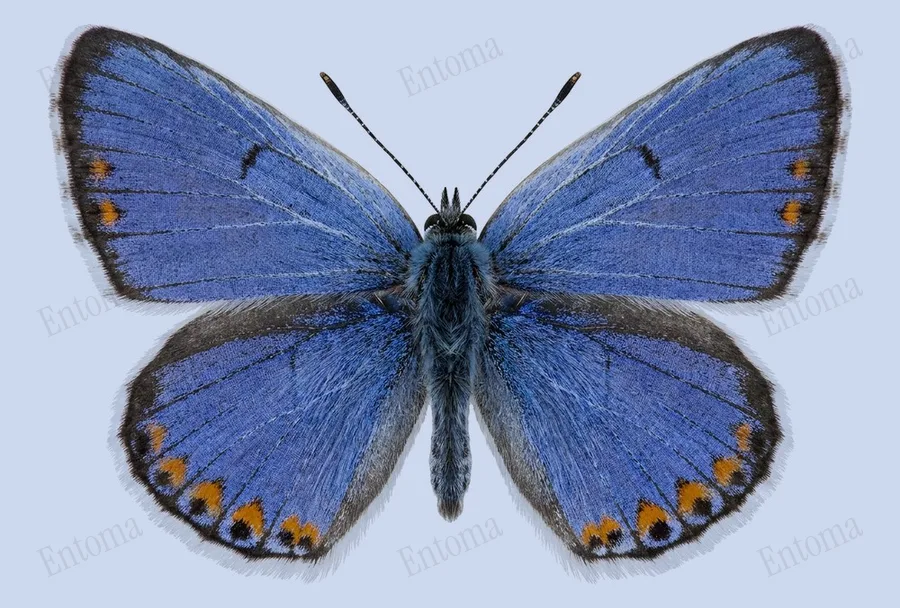
Acmon blue
Caterpillars of the Acmon blue secrete a sugary honeydew that ants drink in exchange for guarding them from predators, a partnership shared by many blue butterflies.
| Where | Dry grasslands, fields and roadsides |
|---|---|
| Size | 17 to 30 mm wingspan |
| When | March to October |
The Acmon blue is a small butterfly with a wingspan of 17 to 30 mm. Males are bright blue above with a narrow dark border, while females are grayish brown, and both sexes share an orange band with silvery flecks along the edge of the hindwings, bordered by a white-fringed margin.
Caterpillars feed on native buckwheats, lupines, trefoils and other low-growing legumes, and are tended by ants that drink the sweet honeydew the caterpillars produce in return for protection from predators. Multiple generations fly across a long season stretching from spring into autumn.
Traits
Habitat
Grassland
Colour
Blue, Brown, Orange
Active
Day
To people
Harmless to people; adults visit garden flowers and do not sting or bite.
Activity through the year
Often confused with
A similar small blue of open grassy country, but has larger, more rounded orange spots on the underside of the hindwing that continue further around the wing margin than in the Acmon blue.
Very close in size and pattern, but males show a duller, less vivid blue above and the orange hindwing band is narrower than in the Acmon blue.
Questions
Is the Acmon blue dangerous to people?
Harmless to people; adults visit garden flowers and do not sting or bite.
When can you see the Acmon blue?
The Acmon blue can be seen from March to October, by day.
Plate retouched from a photo by Koji Shiraiwa, CC BY 4.0, iNaturalist Licence
Report a mistake in this entry
Butterflies and moths›Blues and coppers›Icaricia
Last updated 2026-09-27. Every entry is checked against published sources.