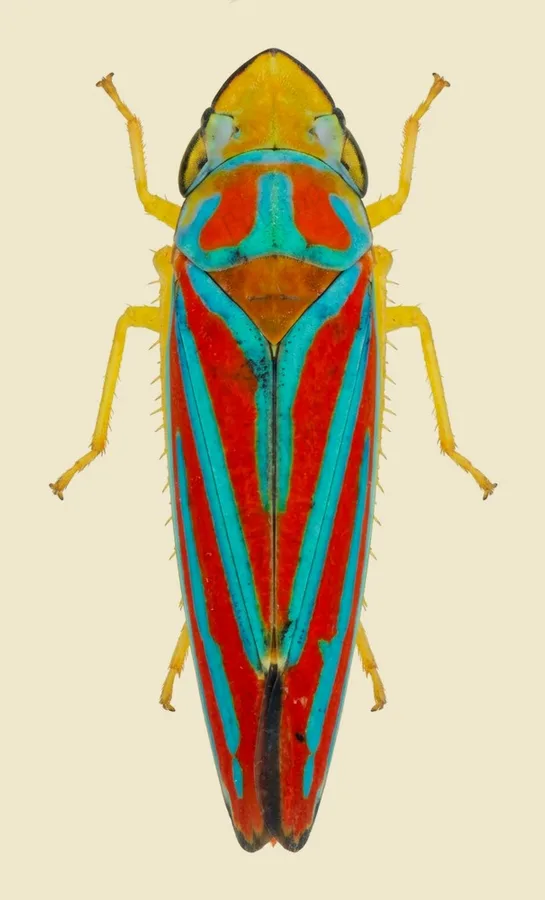
Red-banded leafhopper
This brightly striped leafhopper cannot bite or sting people, but it spreads a bacterium that causes leaf scorch disease in grapevines, elm, oak and other trees.
| Where | Gardens, meadows and woodland edges |
|---|---|
| Size | 7 to 10 mm body length |
| When | May to October |
This small leafhopper carries bold red or orange-red stripes alongside blue or green ones on the wings and thorax, with bright yellow on the head, legs and abdomen. It jumps readily and covers surprising distances when disturbed.
Adults and nymphs feed by sucking sap from a wide range of plants, including blackberry, rose, rhododendron, azalea, grapevine, elm and oak, with one generation a year in the north and likely two further south; the species overwinters as eggs.
Traits
Habitat
Garden
Colour
Red, Blue, Yellow
Active
Day
To people
Cannot bite or sting people, though it can spread a bacterium that causes leaf scorch disease in some ornamental and shade trees.
Activity through the year
Often confused with
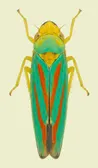
The rhododendron leafhopper feeds only on rhododendron and azalea, while the red-banded leafhopper uses a much wider range of host plants including blackberry, rose and grapevine.
Questions
Is the Red-banded leafhopper dangerous to people?
Cannot bite or sting people, though it can spread a bacterium that causes leaf scorch disease in some ornamental and shade trees.
When can you see the Red-banded leafhopper?
The Red-banded leafhopper can be seen from May to October, by day.
Plate retouched from a photo by cesar stastny, CC BY 4.0, iNaturalist Licence
Report a mistake in this entry
True bugs›Leafhoppers›Graphocephala
Last updated 2026-09-26. Every entry is checked against published sources.