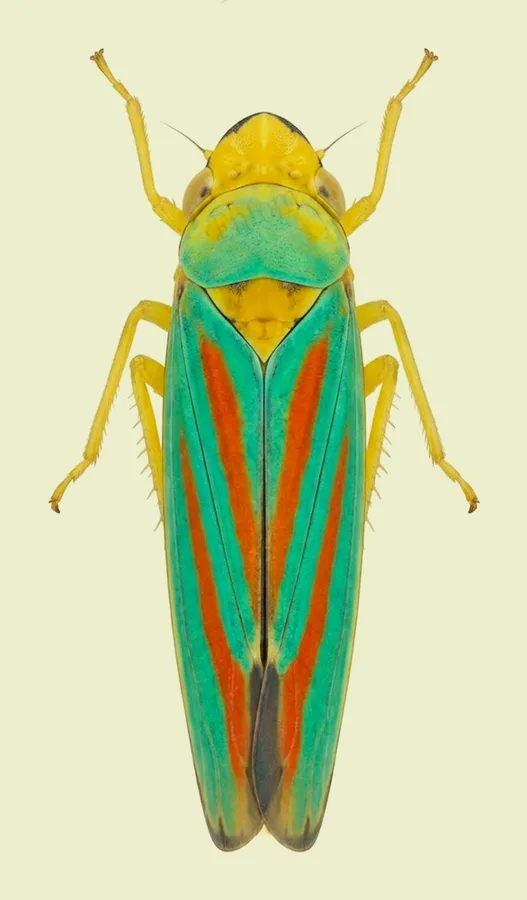
Rhododendron leafhopper
Females lay eggs in rhododendron flower buds each autumn, and the wounds may let in a fungus that kills the bud, though the link stays debated.
| Where | Gardens and parks with rhododendron or azalea |
|---|---|
| Size | 8 to 10 mm body length |
| When | June to October |
Adults have a bluish-green body crossed by two orange stripes, with a pale yellow head and a dark band between the eyes. Nymphs are wingless, creamy white, and live on the undersides of leaves.
Both nymphs and adults feed only on rhododendron and azalea sap. Eggs laid in flower buds in late summer and autumn overwinter and hatch the following spring, and the egg laying wounds are suspected, though not proven, to let in the fungus that causes bud blast.
Traits
Habitat
Garden
Colour
Green, Orange, Yellow
Active
Day
To people
Harmless to people; sap feeding and confined entirely to rhododendron and azalea plants.
Activity through the year
Often confused with
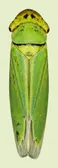
Slightly smaller, about 6 to 9 mm, with a bicoloured yellow and green pronotum and no orange stripes, and found in damp grassland rather than on rhododendron.
Questions
Is the Rhododendron leafhopper dangerous to people?
Harmless to people; sap feeding and confined entirely to rhododendron and azalea plants.
When can you see the Rhododendron leafhopper?
The Rhododendron leafhopper can be seen from June to October, by day.
Plate retouched from a museum specimen photo by Lilian Cooper, Taxon Expeditions, CC0, GBIF Licence
Report a mistake in this entry
True bugs›Leafhoppers›Graphocephala
Last updated 2026-09-26. Every entry is checked against published sources.