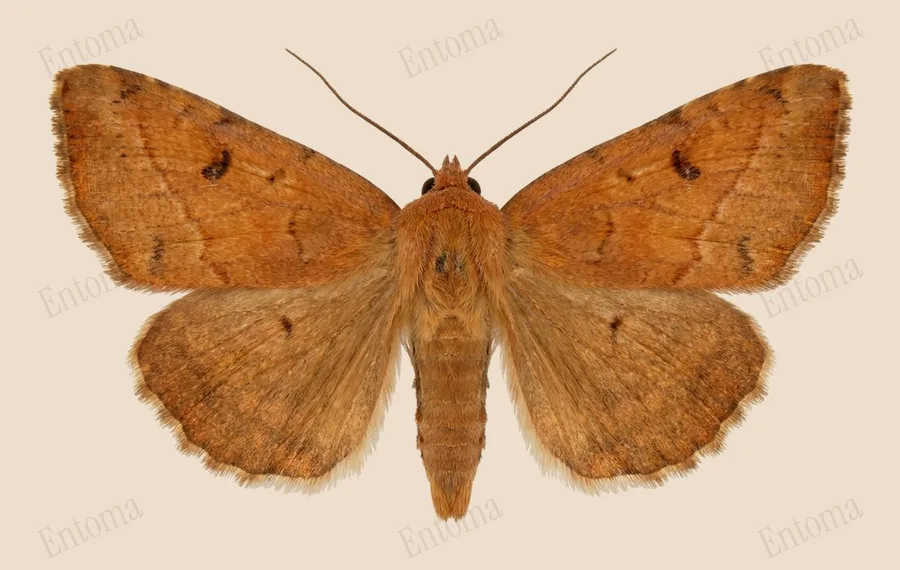
Wedgling
Its caterpillar feeds on wood sorrel, a plant rich in oxalic acid that few other moth larvae are able to tolerate.
| Where | Damp woodlands across North America |
|---|---|
| Size | 20 to 26 mm wingspan |
| When | February to November |
The wedgling is a small moth with forewings that differ sharply between the sexes: reddish brown to grayish in males, shiny dark maroon to blackish in females, both marked with a single dark patch on the leading edge and sharply angled lines.
Caterpillars feed on wood sorrel, an unusual host plant that most other moth larvae avoid because of its acidity, and the species produces several generations across the warmer parts of its range.
Traits
Habitat
Wetland
Colour
Brown, Black
Active
Night
To people
Comes to lights at night and is not a hazard to people.
Activity through the year
Often confused with
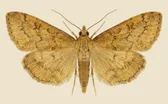
Marked with several wavy dark lines across the wing rather than the wedgling's single bold dark spot on the leading edge of the forewing.
Questions
Is the Wedgling dangerous to people?
Comes to lights at night and is not a hazard to people.
When can you see the Wedgling?
The Wedgling can be seen from February to November, at night.
Plate retouched from a photo by Sam Kieschnick, CC BY 4.0, iNaturalist Licence
Report a mistake in this entry
Butterflies and moths›Owlet moths›Galgula
Last updated 2026-09-26. Every entry is checked against published sources.