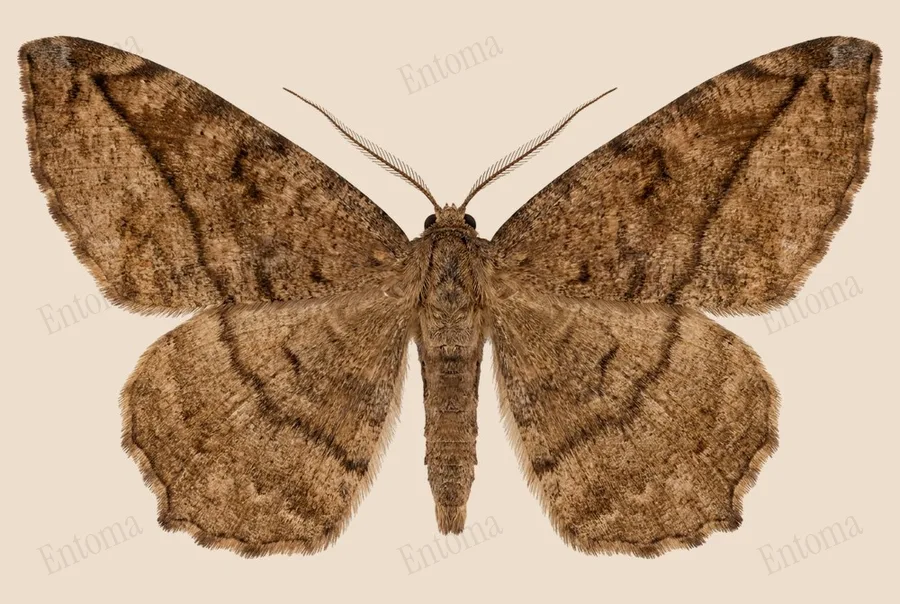
Curved-toothed geometer moth
This moth earns its name from a small hooked point at each forewing tip, a shape shared by almost no other North American moth.
| Where | Deciduous and mixed woodlands |
|---|---|
| Size | 38 to 56 mm wingspan |
| When | March to August |
The curved-toothed geometer is mottled yellowish tan and brown, with a dark band crossing each wing that stops short of the edges. Each forewing ends in a small hooked point, and the hindwing margins are gently scalloped, a combination not shared by most other moths.
Caterpillars are loopers that feed on the leaves of ash, basswood, oak, maple, poplar and willow trees. Adults fly from spring into late summer and come readily to lights at night.
Traits
Habitat
Woodland
Colour
Brown, Grey, Yellow
Active
Night
To people
Comes to lights at night but does not bite or sting; harmless to people.
Activity through the year
Often confused with
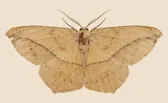
Very similar mottled brown pattern and habitat, but its hindwing margins end in a small point rather than the scalloped, wavy edge of the Curved-toothed geometer moth.
Questions
Is the Curved-toothed geometer moth dangerous to people?
Comes to lights at night but does not bite or sting; harmless to people.
When can you see the Curved-toothed geometer moth?
The Curved-toothed geometer moth can be seen from March to August, at night.
Plate retouched from a photo by Andy Deans, CC BY 4.0, iNaturalist Licence
Report a mistake in this entry
Butterflies and moths›Geometer moths›Eutrapela
Last updated 2026-09-27. Every entry is checked against published sources.