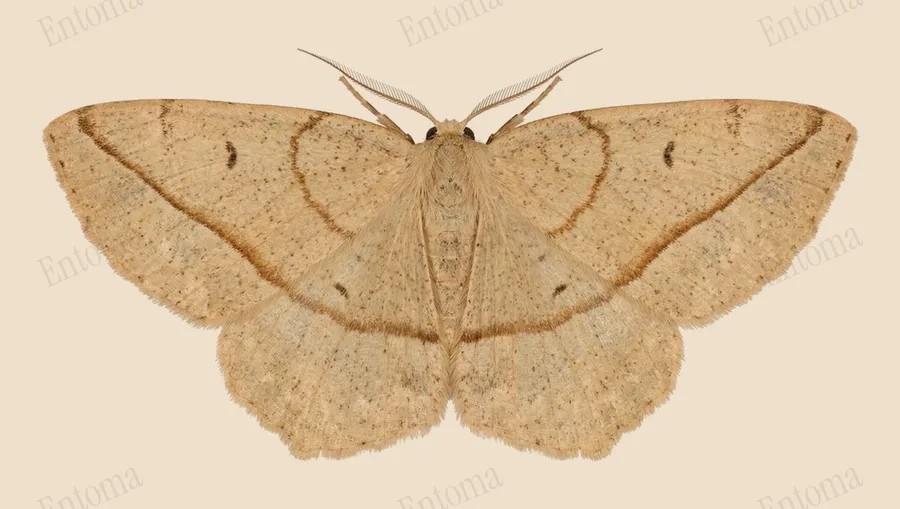
Confused eusarca moth
This moth's forewing pattern is so variable between individuals that entomologists named it confusaria for how easily it is misidentified.
| Where | Meadows, fields and gardens |
|---|---|
| Size | 29 to 41 mm wingspan |
| When | May to September |
Wing color varies widely between individuals from pale tan to dark smoky brown, but most show a curved line near the base, a small dot further out, and a thin line crossing toward the wingtip.
Caterpillars feed on low plants such as aster, clover, dandelion and goldenrod, and the variable adults fly in a single long generation from spring into autumn.
Traits
Habitat
Grassland
Colour
Yellow, Brown, Grey
Active
Night
To people
Harmless to people; the caterpillars feed on low plants, not skin.
Activity through the year
Often confused with
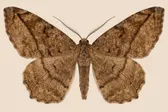
Larger overall at 38 to 56 mm wingspan, the Curve-toothed Geometer is easily told apart by the toothed, downward hook at the outer edge of each forewing, a shape the Confused Eusarca never shows.
Questions
Is the Confused eusarca moth dangerous to people?
Harmless to people; the caterpillars feed on low plants, not skin.
When can you see the Confused eusarca moth?
The Confused eusarca moth can be seen from May to September, at night.
Plate retouched from a photo by Judy Gallagher, CC BY‑SA 4.0, iNaturalist Licence
The plate on this page is shared under the same licence as its source, CC BY-SA.
Report a mistake in this entry
Butterflies and moths›Geometer moths›Eusarca
Last updated 2026-09-27. Every entry is checked against published sources.