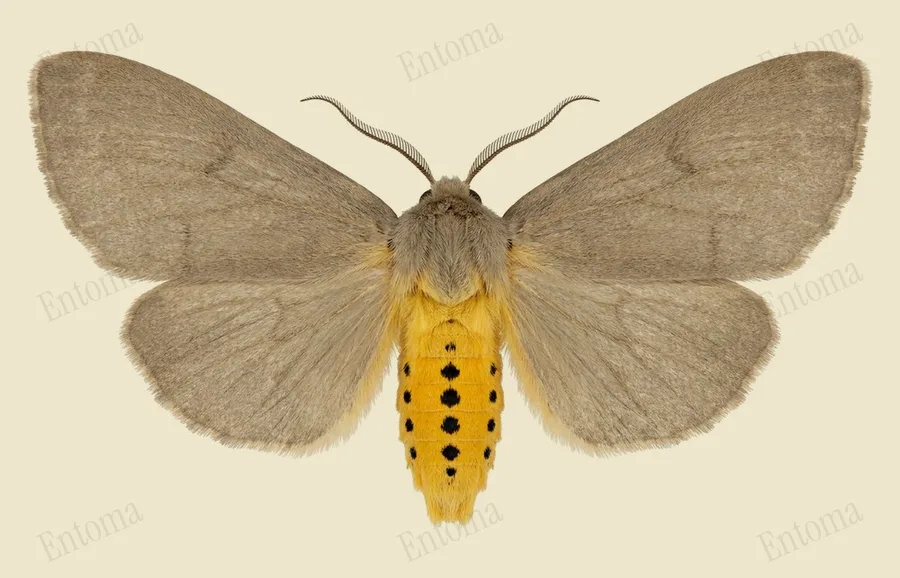
Milkweed tussock moth
Its caterpillars often feed in groups of up to a dozen, storing toxic compounds from milkweed that carry over into the adult moth's defence.
| Where | Fields, meadows and milkweed patches |
|---|---|
| Size | 32 to 45 mm wingspan |
| When | June to September |
Late-stage caterpillars are covered in dense tufts of black, white and orange hair arranged in rows down the back, quite different from the plainer, grayish brown adult moth, which shows an orange and black abdomen beneath drab wings.
Caterpillars feed in groups on milkweed and dogbane through the summer, storing toxic cardiac glycosides from these plants as a lifelong defence, and their bristly hairs can mildly irritate skin if handled.
Traits
Habitat
Grassland
Colour
Brown, Orange, Grey
Active
Night
To people
Mild
Caterpillars carry bristly hairs that can irritate skin on contact; adults are harmless and rarely encountered since they fly only at night.
Activity through the year
Often confused with
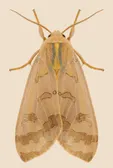
Its caterpillar is more evenly yellowish tan with long white or black hair pencils projecting from the front and rear, rather than the Milkweed tussock moth caterpillar's even rows of black, white and orange tufts.
Questions
Is the Milkweed tussock moth dangerous to people?
Mild. Caterpillars carry bristly hairs that can irritate skin on contact; adults are harmless and rarely encountered since they fly only at night.
When can you see the Milkweed tussock moth?
The Milkweed tussock moth can be seen from June to September, at night.
Plate retouched from a museum specimen photo by San Diego Natural History Museum, CC0, GBIF Licence
Report a mistake in this entry
Butterflies and moths›Erebid moths›Euchaetes
Last updated 2026-09-26. Every entry is checked against published sources.