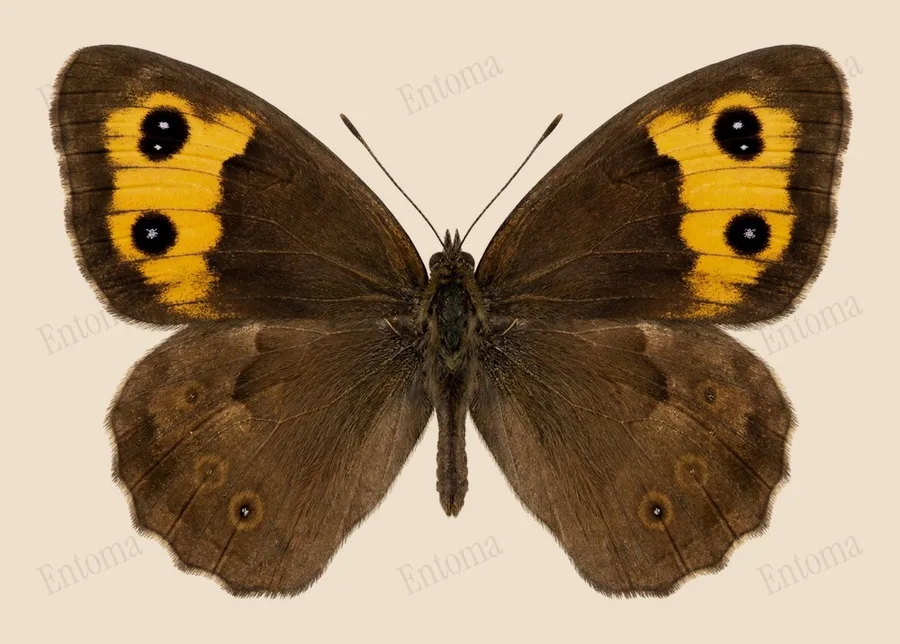
Common wood-nymph
When attacked, this butterfly flashes yellow eyespots to startle the predator, then drops into grass and vanishes by showing only its dull brown underwings.
| Where | Prairies, meadows and open woodlands |
|---|---|
| Size | 44 to 76 mm wingspan |
| When | June to September |
The common wood-nymph is a brown butterfly with two prominent yellow-ringed eyespots on each forewing. Populations in the southeastern part of its range often show a bold yellow patch behind the eyespots, while western populations may show a paler patch or none at all.
Caterpillars feed on grasses and there is a single generation each year. Adults rarely visit flowers, favoring sap and rotting fruit instead, and can be found in prairies, meadows and open woodlands from June to September.
Traits
Habitat
Grassland
Colour
Brown, Yellow
Active
Day
To people
Not known to bite or sting; adults are more often seen feeding on tree sap than on flowers.
Activity through the year
Often confused with
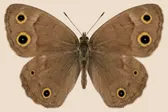
Shows yellow-rimmed eyespots on both the upperside and underside of all four wings, while the wood-nymph carries its eyespots mainly on the forewing.
Questions
Is the Common wood-nymph dangerous to people?
Not known to bite or sting; adults are more often seen feeding on tree sap than on flowers.
When can you see the Common wood-nymph?
The Common wood-nymph can be seen from June to September, by day.
Plate retouched from a museum specimen photo by Davidson College, CC0, GBIF Licence
Report a mistake in this entry
Butterflies and moths›Brush-footed butterflies›Cercyonis
Last updated 2026-09-26. Every entry is checked against published sources.