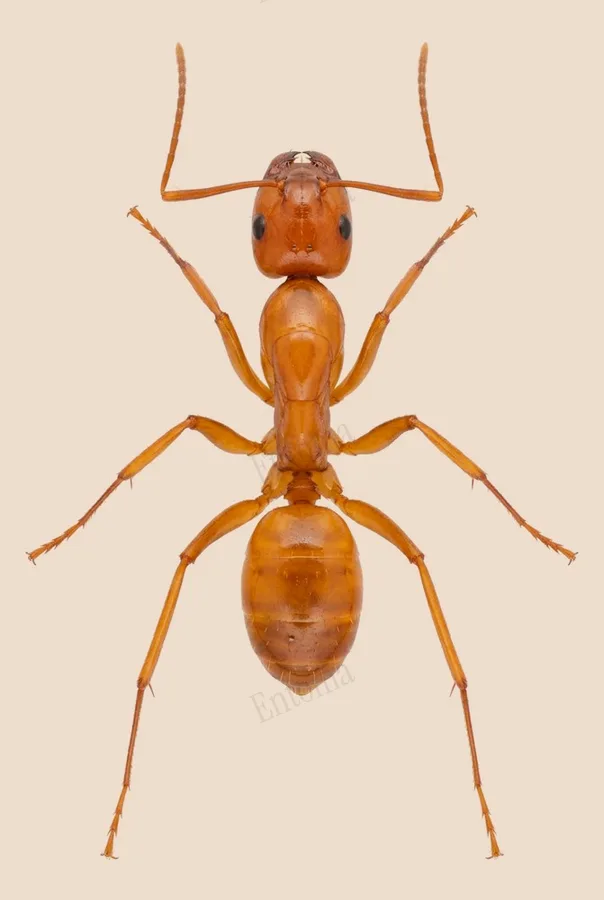
Chestnut carpenter ant
Colonies of this ant settle into dormancy at the very first cool days of autumn, weeks before most other ants stop foraging.
| Where | Rotting logs in eastern forests |
|---|---|
| Size | 8 to 14 mm body length (workers) |
| When | March to October |
Workers of the Chestnut carpenter ant are a deep, glossy golden orange to red, with smooth cheeks and a single node on the waist typical of the genus. Larger major workers can be noticeably bigger than minor workers from the same nest.
Colonies nest inside rotting stumps, logs and hollow trees rather than sound wood, hollowing out galleries without eating the wood itself. Mating flights take place in June and July, after which new queens shed their wings and start fresh nests.
Traits
Habitat
Woodland
Colour
Orange, Red
Active
Night
To people
Mild
Workers cannot sting, but a large worker's bite can pinch and briefly burn from the formic acid it releases.
Activity through the year
Often confused with
Duller and darker reddish brown with small hairs on the cheeks, rather than the smooth, glossy golden orange finish and hairless cheeks of the Chestnut carpenter ant.
Questions
Is the Chestnut carpenter ant dangerous to people?
Mild. Workers cannot sting, but a large worker's bite can pinch and briefly burn from the formic acid it releases.
When can you see the Chestnut carpenter ant?
The Chestnut carpenter ant can be seen from March to October, at night.
Plate retouched from a photo by Kevin Anderson, CC BY 4.0, iNaturalist Licence
Report a mistake in this entry
Bees, wasps and ants›Ants›Camponotus
Last updated 2026-09-27. Every entry is checked against published sources.