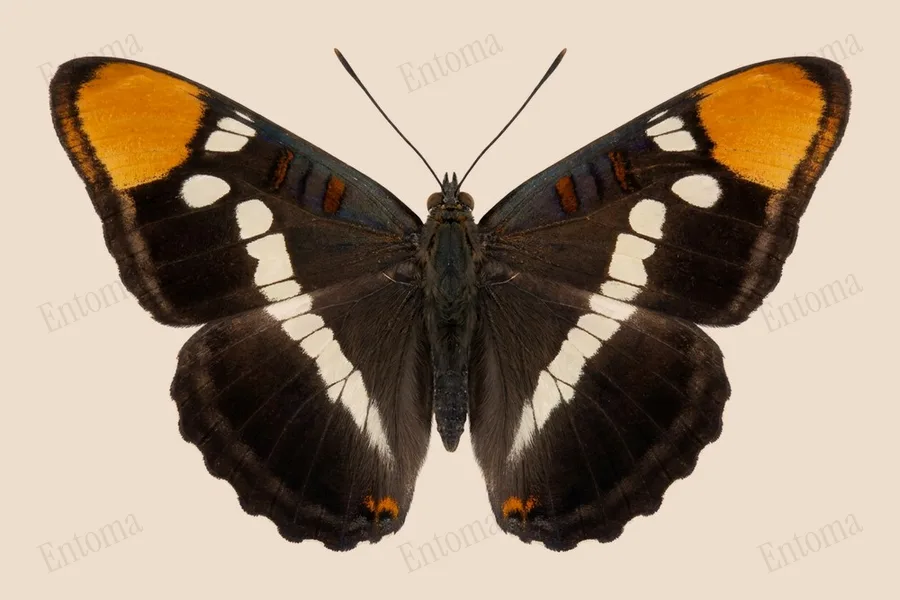
California sister
Its caterpillars and adults absorb bitter tannins from the oak leaves they eat, making this butterfly distasteful enough that birds generally leave it alone.
| Where | Oak woodlands along the Pacific coast |
|---|---|
| Size | 64 to 102 mm wingspan |
| When | April to October |
The California sister is dark brown to black above, crossed by a narrow white band on both wings and marked with a bold, sharply edged orange patch near each forewing tip. The underside shows bands of orange, white and pale lavender.
Caterpillars feed on oaks, especially canyon live oak, and the tannins in the leaves make both larvae and adults unpalatable to birds. Adults rarely visit flowers, instead feeding on rotting fruit and mud, puddling on wet soil to take up salts and minerals.
Traits
Habitat
Woodland
Colour
Brown, White, Orange
Active
Day
To people
Harmless to people; adults rarely visit flowers and are more often seen puddling on wet soil or feeding at rotting fruit.
Activity through the year
Often confused with
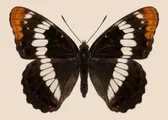
Overlapping in wingspan at about 47 to 76 mm, but the Lorquin's admiral has black, not dark brown, wings and an orange patch that reaches the very tip of the forewing, while the California sister's orange patch sits back from the wingtip.
Questions
Is the California sister dangerous to people?
Harmless to people; adults rarely visit flowers and are more often seen puddling on wet soil or feeding at rotting fruit.
When can you see the California sister?
The California sister can be seen from April to October, by day.
Plate retouched from a photo by isaac550, CC0, iNaturalist Licence
Report a mistake in this entry
Butterflies and moths›Brush-footed butterflies›Adelpha
Last updated 2026-09-27. Every entry is checked against published sources.