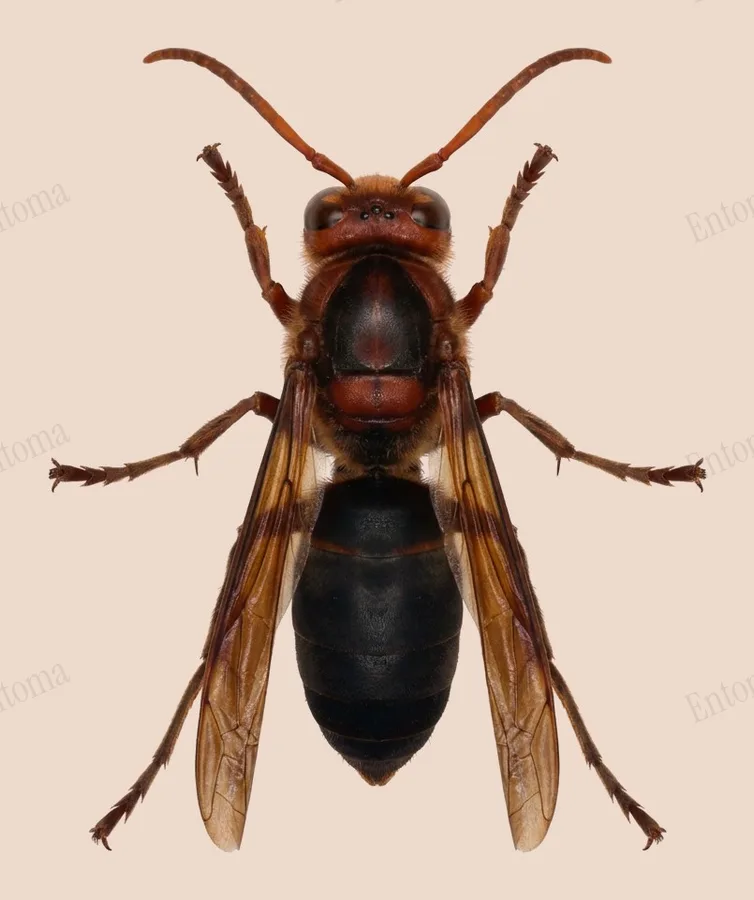
Black-bellied hornet
The Black-bellied hornet digs its nest into sloped ground and keeps a wide bare patch in front of the entrance, giving its guards a clear line of sight.
| Where | Low to mid elevation mountain forests |
|---|---|
| Size | 20 to 32 mm body length |
| When | March to April and June to January |
The Black-bellied hornet has a reddish brown head and thorax set against a wholly black abdomen, a combination that separates it from other Vespa species sharing its mountain range. Workers and males are noticeably smaller than the queens.
Colonies build their nests underground on sloped terrain, and workers actively guard the entrance, attacking anything that comes too close. Sources describe it as one of the more aggressive and dangerous hornets sharing its range, with a sting that can cause significant swelling.
Traits
Habitat
Woodland
Colour
Black, Brown
Active
Day
To people
Dangerous
Only females can sting; this hornet defends its nest aggressively and is regarded as one of the more dangerous hornets in its range, so nests are best left undisturbed.
Activity through the year
Often confused with
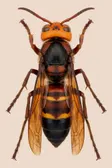
Black-tailed hornet has a pale yellow brown head and an abdomen banded with orange yellow and gold, while the Black-bellied hornet has a reddish brown head and a wholly black abdomen.
Questions
Is the Black-bellied hornet dangerous to people?
Dangerous. Only females can sting; this hornet defends its nest aggressively and is regarded as one of the more dangerous hornets in its range, so nests are best left undisturbed.
When can you see the Black-bellied hornet?
The Black-bellied hornet can be seen from March to April and June to January, by day.
Plate retouched from a photo by Ian Dugdale, CC BY 4.0, iNaturalist Licence
Report a mistake in this entry
Bees, wasps and ants›Wasps and hornets›Vespa
Last updated 2026-09-27. Every entry is checked against published sources.