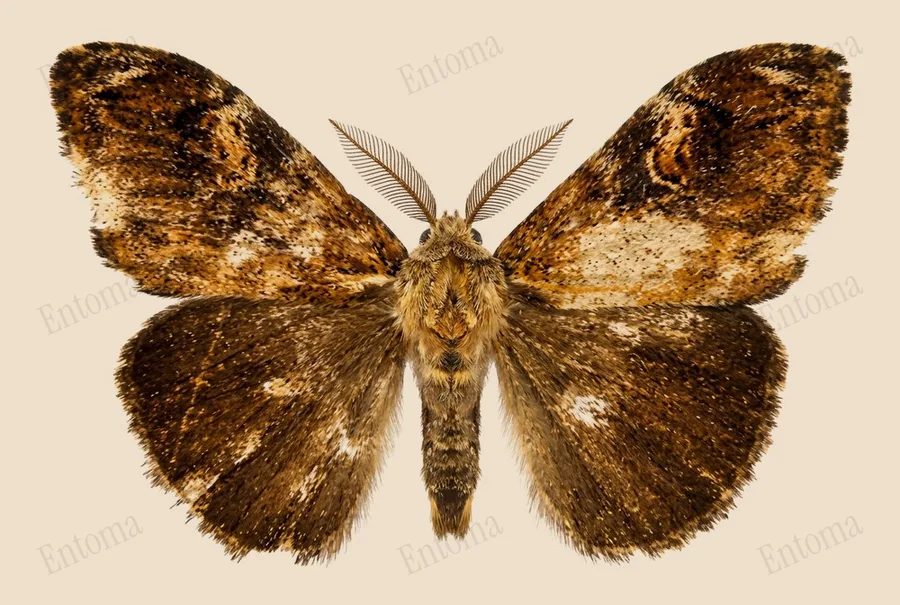
Cocoa tussock moth
Female Cocoa tussock moths never grow wings and spend their entire adult life sitting beside the cocoon where they hatched.
| Where | Gardens and plantations across tropical Asia |
|---|---|
| Size | 20 to 30 mm wingspan (males; females are wingless) |
| When | January to December |
The Cocoa tussock moth is strongly different between the sexes: males are plain brown moths with a wavy, mottled pattern, while females are wingless, fuzzy and grub-like, remaining beside their cocoon for life.
Caterpillars feed on an unusually wide range of plants, including cocoa, mango and rubber, and their loose hairs can irritate skin on contact, so cocoons and larvae are best left untouched.
Traits
Habitat
Garden
Colour
Brown, Yellow
Active
Night
To people
Mild
Caterpillar hairs and cocoons can cause itching and rash on contact; best left untouched.
Activity through the year
Often confused with
Female White-spotted tussock moths have fully developed wings, while female Cocoa tussock moths are wingless and never fly.
Questions
Is the Cocoa tussock moth dangerous to people?
Mild. Caterpillar hairs and cocoons can cause itching and rash on contact; best left untouched.
When can you see the Cocoa tussock moth?
The Cocoa tussock moth can be seen from January to December, at night.
Plate retouched from a museum specimen photo by Taiwan Biodiversity Research Institute, CC BY 4.0, GBIF Licence
Report a mistake in this entry
Butterflies and moths›Erebid moths›Orgyia
Last updated 2026-09-27. Every entry is checked against published sources.