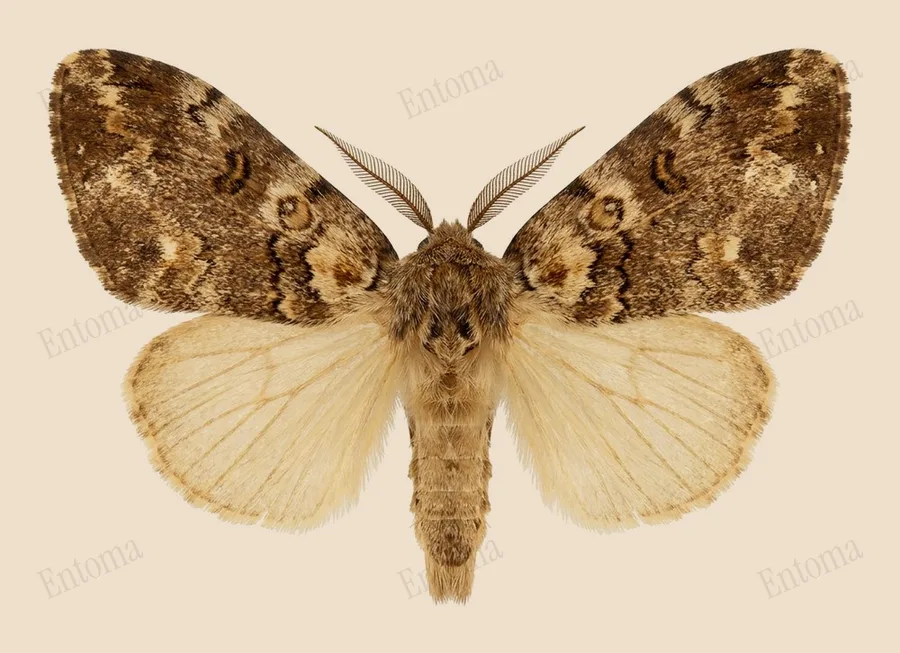
Brown tussock moth
Females of this tussock moth grow noticeably larger than males, with a wingspan of up to 54 mm compared to the male's 40 mm.
| Where | Farms and gardens across southern Asia |
|---|---|
| Size | 30 to 54 mm wingspan |
| When | January to December |
Males are smoky brown with pale, black-speckled hindwings, while females are paler with an irregular dark brown zone across the middle of the forewing. Caterpillars are hairy, with four pale dorsal tufts and a reddish head.
Larvae feed on an unusually wide range of plants, from banana and citrus to tea and timber trees, and can build up in localized patches on foliage.
Traits
Habitat
Farmland
Colour
Brown, Grey
Active
Night
To people
Caterpillars feed on many garden and orchard plants; avoid handling the hairy larvae.
Activity through the year
Often confused with
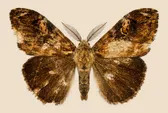
Females are wingless and never fly, unlike the fully winged, if smaller, females of the Brown tussock moth.
Questions
Is the Brown tussock moth dangerous to people?
Caterpillars feed on many garden and orchard plants; avoid handling the hairy larvae.
When can you see the Brown tussock moth?
The Brown tussock moth can be seen from January to December, at night.
Plate retouched from a museum specimen photo by Taiwan Biodiversity Research Institute, CC BY 4.0, GBIF Licence
Report a mistake in this entry
Butterflies and moths›Erebid moths›Olene
Last updated 2026-09-27. Every entry is checked against published sources.