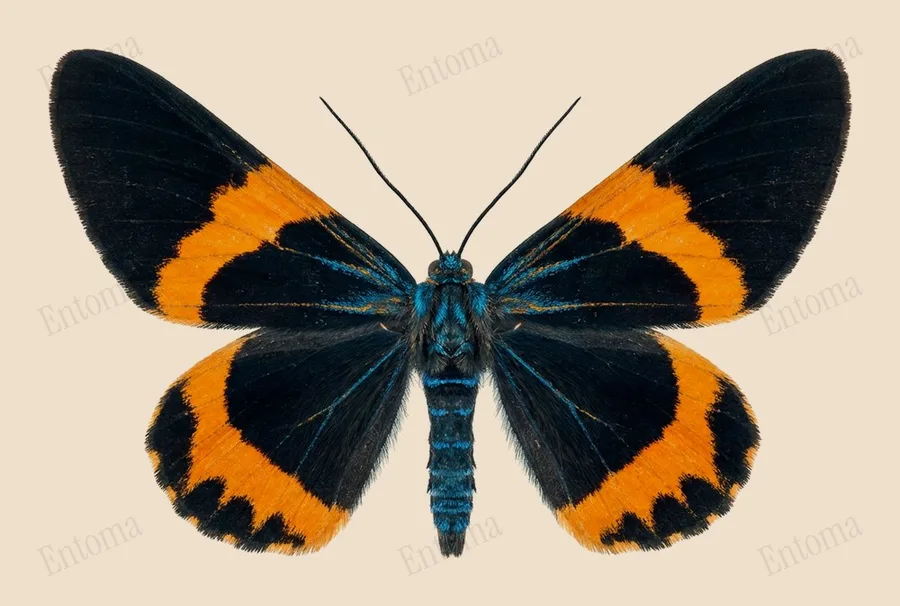
Milionia zonea
This day-flying moth was long mistaken for a butterfly and treated as the same species as a close relative until genetic study split them apart in 2005.
| Where | Forests from the Himalaya to the Philippines |
|---|---|
| Size | 54 to 59 mm wingspan |
| When | November and January to July |
This is a large, showy geometrid moth with velvety black wings crossed by a broad orange band and scattered black spots, the whole pattern catching an iridescent blue sheen in flight.
Caterpillars feed on podocarp trees and can strip entire branches bare during outbreaks. Adults fly actively by day like a butterfly and are often seen resting or gathering around host trees in parks, gardens and forest edges.
Traits
Habitat
Woodland
Colour
Black, Blue, Orange
Active
Day
To people
Flies by day like a butterfly and is easy to watch at rest; adults are harmless to people, though larvae can defoliate host trees.
Activity through the year
Often confused with
The Red slug caterpillar moth has dark green forewings and blackish hindwings crossed by a pale yellow band, quite different from the sapphire-blue sheen and broad orange band of this species.
Questions
Is Milionia zonea dangerous to people?
Flies by day like a butterfly and is easy to watch at rest; adults are harmless to people, though larvae can defoliate host trees.
When can you see Milionia zonea?
Milionia zonea can be seen from November and January to July, by day.
Plate retouched from a museum specimen photo by Taiwan Biodiversity Research Institute, CC BY 4.0, GBIF Licence
Report a mistake in this entry
Butterflies and moths›Geometer moths›Milionia
Last updated 2026-09-27. Every entry is checked against published sources.