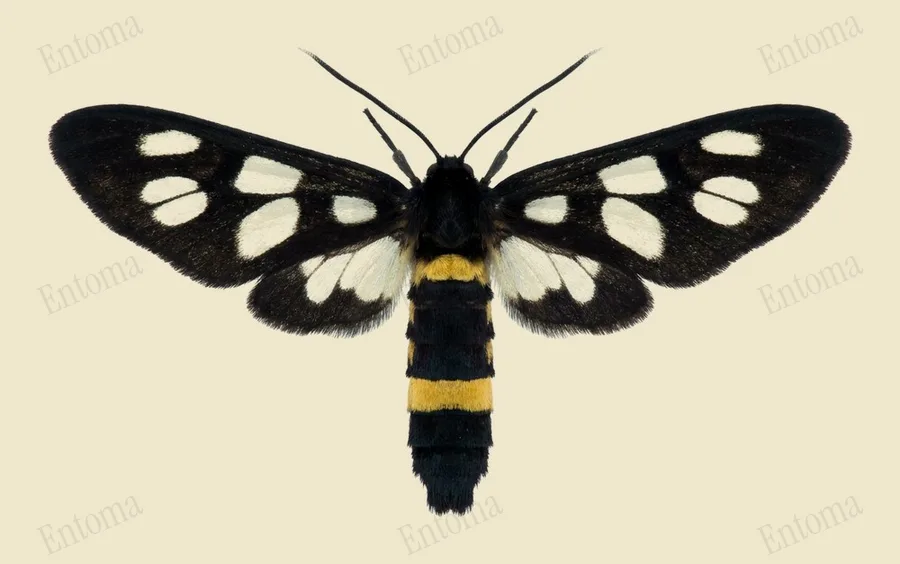
Japanese nine-spotted moth
Despite looking like a small black and yellow wasp, this is a harmless day-flying moth whose caterpillars will eat both live and dead leaves.
| Where | Meadows, roadsides and gardens |
|---|---|
| Size | 30 to 37 mm wingspan |
| When | June to September |
The wings are black with rows of semi-transparent white spots, and two yellow bands cross the body when viewed from above, with a line of yellow spots running down each side of the abdomen. The pattern and the day-flying habit together make it an effective wasp mimic.
Two generations fly each year, one from early June into July and a second from mid August into September. Caterpillars feed on low plants such as white clover, dandelion and horsetail, and are known to eat both living and already dead leaves.
Traits
Habitat
Grassland
Colour
Black, Yellow
Active
Day
To people
Harmless to people despite its wasp-like look; it has no sting and does not bite.
Activity through the year
Often confused with
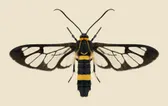
Shows a yellow band across the back of the neck that the Japanese nine-spotted moth lacks, on an otherwise similarly patterned black day-flying moth.
Questions
Is the Japanese nine-spotted moth dangerous to people?
Harmless to people despite its wasp-like look; it has no sting and does not bite.
When can you see the Japanese nine-spotted moth?
The Japanese nine-spotted moth can be seen from June to September, by day.
Plate retouched from a photo by plant 0302, CC BY 4.0, iNaturalist Licence
Report a mistake in this entry
Butterflies and moths›Erebid moths›Amata
Last updated 2026-09-27. Every entry is checked against published sources.