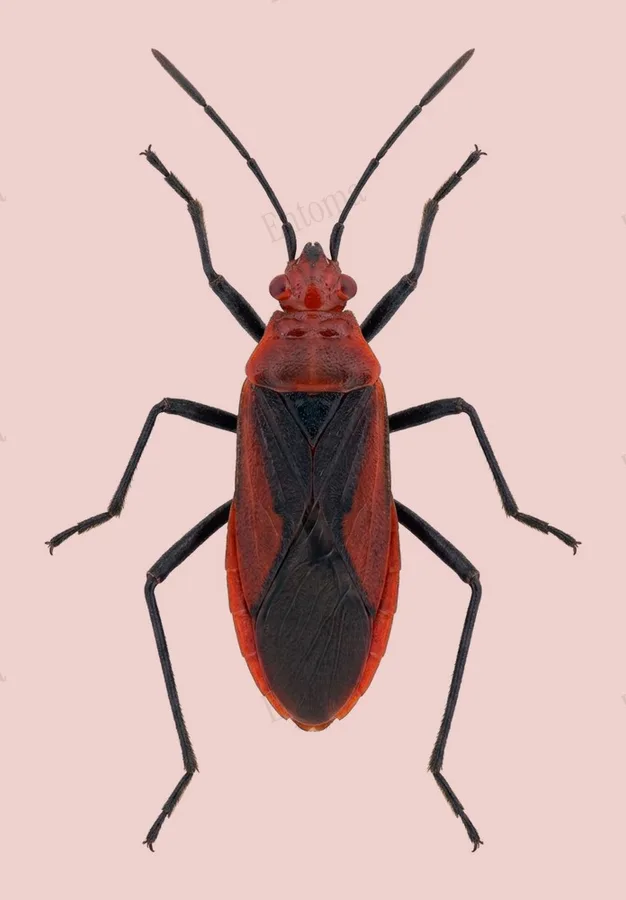
Leptocoris vicinus
Adults and nymphs gather in dense, conspicuous groups on the seed pods of soapberry family trees, staining pavements red without ever biting or stinging people.
| Where | Soapberry family trees and shrubs |
|---|---|
| Size | 13 to 16 mm body length |
| When | October and December to July |
This bug has a bright red to reddish brown body marked with a pale edged black V shape around the scutellum, black wings, and black legs and antennae, and measures 13 to 16 mm long. Newly moulted individuals are entirely bright red before darkening with age.
Both nymphs and adults pierce the seeds and fruit of soapberry family trees with needle like mouthparts to feed on the sap inside, often forming dense aggregations on trunks and seed pods that can seasonally number in the hundreds.
Traits
Habitat
Towns
Colour
Red, Black
Active
Day
To people
Does not bite or sting; large seasonal gatherings are a nuisance rather than a health concern.
Activity through the year
Often confused with
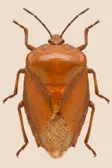
Often confused with this bug where the two occur together, but the litchi stink bug is larger at 24 to 28 mm, shield shaped and dull yellowish brown, without the sharp black V mark on the scutellum.
Questions
Is Leptocoris vicinus dangerous to people?
Does not bite or sting; large seasonal gatherings are a nuisance rather than a health concern.
When can you see Leptocoris vicinus?
Leptocoris vicinus can be seen from October and December to July, by day.
Plate retouched from a photo by Tim, CC BY 4.0, iNaturalist Licence
Report a mistake in this entry
True bugs›Scentless plant bugs›Leptocoris
Last updated 2026-09-27. Every entry is checked against published sources.