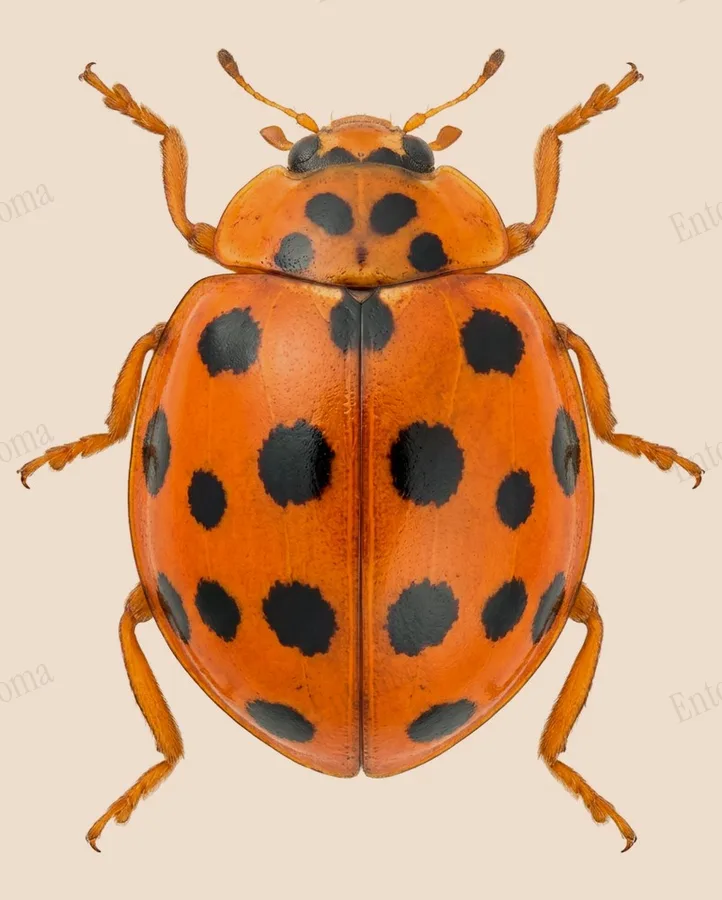
Greater Asian lady beetle
This beetle is a dominant aphid predator in parts of northeastern India and has been used to control aphid outbreaks on oak trees grown for silk production.
| Where | Crop fields, orchards and gardens |
|---|---|
| Size | 6.7 to 10 mm body length |
| When | March to January |
The Greater Asian lady beetle is broad and rounded, with reddish yellow to orange wing cases marked by black spots and a pale yellow head, a pattern typical of many ladybird beetles in this genus.
Both adults and larvae feed on aphids and other soft bodied insects, and populations build up quickly around aphid outbreaks on crops, garden plants and oak trees grown for silk production.
Traits
Habitat
Farmland
Colour
Orange, Black
Active
Day
To people
Feeds on aphids and other soft bodied insects; not documented to bite or sting people.
Activity through the year
Often confused with
Noticeably smaller at about 5 to 7 mm long, with only two to four black spots on each wing case rather than the numerous small spots of the Greater Asian lady beetle.
Questions
Is the Greater Asian lady beetle dangerous to people?
Feeds on aphids and other soft bodied insects; not documented to bite or sting people.
When can you see the Greater Asian lady beetle?
The Greater Asian lady beetle can be seen from March to January, by day.
Plate retouched from a photo by bloodlesshunting, CC BY 4.0, iNaturalist Licence
Report a mistake in this entry
Last updated 2026-09-27. Every entry is checked against published sources.