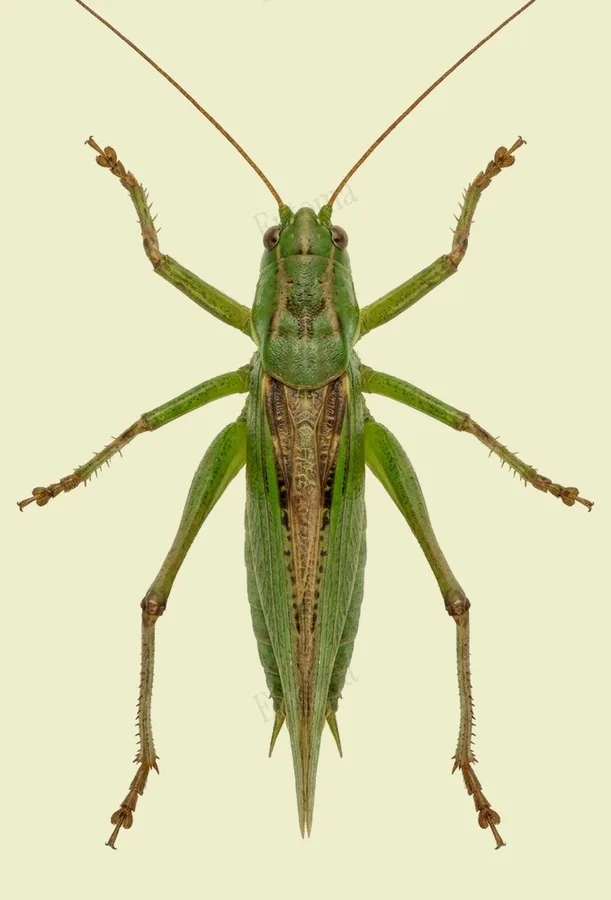
Gampsocleis ussuriensis
Its wings extend further past the body than those of its two larger, near identical relatives, giving this smaller katydid its long winged name.
| Where | Wetland margins and tall grassland |
|---|---|
| Size | 27 to 37 mm body length |
| When | April to September |
This katydid occurs in both green and brown forms and is smaller than its two closely related look alikes, with wings that reach noticeably further past the tip of the abdomen.
Nymphs start out feeding on soft plant material such as lettuce and carrot leaves, then add other insects to their diet as they mature, and males sing only in bright, sunny weather among wetland margins and tall grass.
Traits
Habitat
Wetland
Colour
Green, Brown
Active
Day
To people
Feeds partly on other insects as an adult; calm to watch from a short distance and rarely encountered up close.
Activity through the year
Often confused with
Larger bodied with shorter wings that do not reach as far past the tip of the abdomen as in this species.
Questions
Is Gampsocleis ussuriensis dangerous to people?
Feeds partly on other insects as an adult; calm to watch from a short distance and rarely encountered up close.
When can you see Gampsocleis ussuriensis?
Gampsocleis ussuriensis can be seen from April to September, by day.
Plate retouched from a photo by rpcr213, CC BY 4.0, iNaturalist Licence
Report a mistake in this entry
Crickets and grasshoppers›Bush crickets›Gampsocleis
Last updated 2026-09-27. Every entry is checked against published sources.