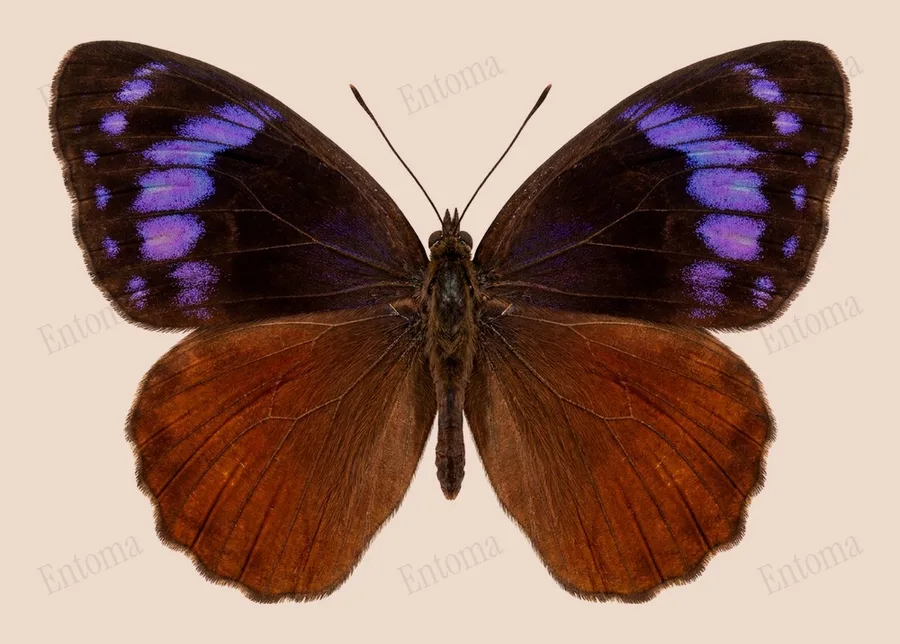
Common palmfly
Male Common palmflies mimic distasteful Euploea butterflies, while females in some populations instead mimic Danaus milkweed butterflies, giving the two sexes strikingly different color patterns.
| Where | Gardens and forest edges across tropical Asia |
|---|---|
| Size | 60 to 80 mm wingspan |
| When | January to December |
The Common palmfly shows strong differences between sexes and populations: males are blackish brown with a pale blue band near the forewing tip and a chestnut border on the hindwing, while females in some regions turn orange and black instead.
Caterpillars feed only on palm leaves, including coconut, rattan and fan palms, a narrow diet reflected in the species' common name. Adults keep to shaded forest edges and gardens, puddling at damp ground and visiting flowers for nectar.
Traits
Habitat
Woodland
Colour
Brown, Blue, Black
Active
Day
To people
Feeds and rests around palms in gardens and forest edges; harmless to people.
Activity through the year
Often confused with
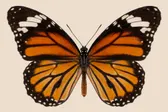
The Common tiger is bright orange with bold black wing veins and white-spotted borders, unlike the dark brown, blue-banded wings of the male Common palmfly.
Questions
Is the Common palmfly dangerous to people?
Feeds and rests around palms in gardens and forest edges; harmless to people.
When can you see the Common palmfly?
The Common palmfly can be seen from January to December, by day.
Plate retouched from a museum specimen photo by Swiss Natural History Collections - SwissNatColl, CC BY 4.0, GBIF Licence
Report a mistake in this entry
Butterflies and moths›Brush-footed butterflies›Elymnias
Last updated 2026-09-27. Every entry is checked against published sources.