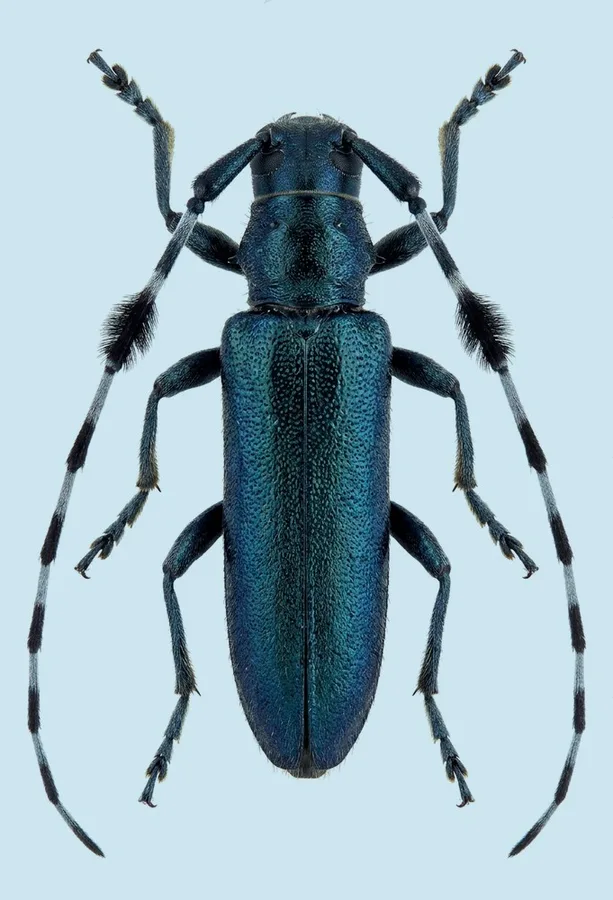
Agapanthia amurensis
Unlike its close relative Agapanthia pilicornis, this longhorn beetle has plain, unbanded antennae and a paler body, the easiest way to tell the two apart in the field.
| Where | Meadows and forest edges, East Asia |
|---|---|
| Size | 11 to 17 mm body length |
| When | April to August |
A slender longhorn beetle with a pale body and long, evenly coloured antennae lacking the dark banding seen in some related species.
Adults are found on meadow and forest edge plants such as asters and milkvetch from late spring into late summer, across a range stretching from the Russian Far East and Korea to Mongolia, northeastern China and Japan.
Traits
Habitat
Grassland
Colour
Brown
Active
Day
To people
Not known to bite or sting; it is usually seen resting quietly on its host plants.
Activity through the year
Often confused with
A close relative with irregularly banded, variegated antennae and a darker body, unlike the plain antennae and paler colouring of this species.
Questions
Is Agapanthia amurensis dangerous to people?
Not known to bite or sting; it is usually seen resting quietly on its host plants.
When can you see Agapanthia amurensis?
Agapanthia amurensis can be seen from April to August, by day.
Plate retouched from a photo by Kim, Hyun-tae, CC BY 4.0, iNaturalist Licence
Report a mistake in this entry
Beetles›Longhorn beetles›Agapanthia
Last updated 2026-09-27. Every entry is checked against published sources.