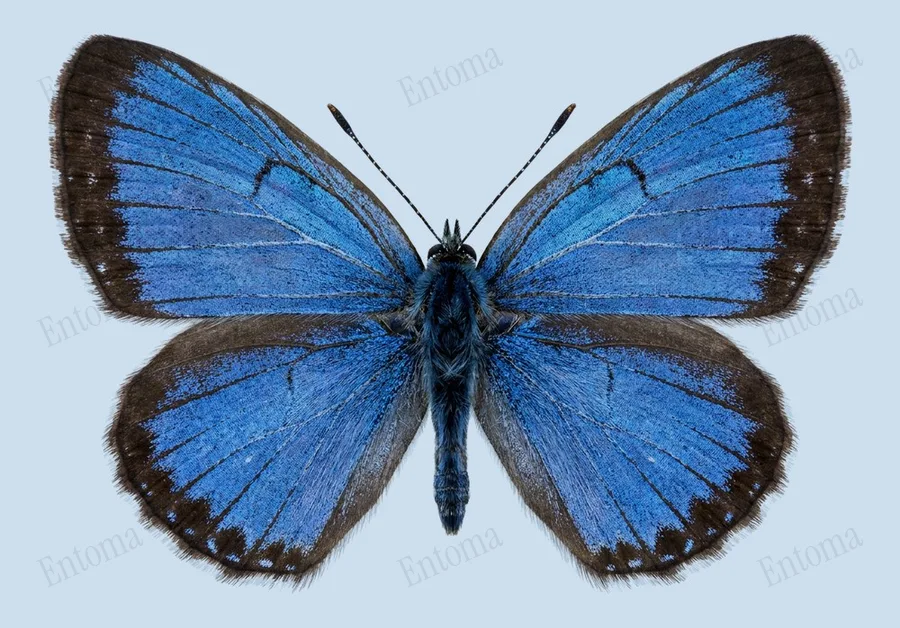
Common hedge blue
Common Hedge Blue caterpillars feed on more than fifty different plant species across several unrelated families, an unusually broad diet for a small blue butterfly.
| Where | Broadleaf, coastal and urban forest edges |
|---|---|
| Size | 11 to 17 mm forewing length |
| When | January to December |
The Common hedge blue is a small butterfly. Males have a bright, glossy indigo blue upperside edged with a dark brown border, while females show a narrower blue area. The underside of both sexes is white, marked with a row of small black brown spots.
Caterpillars are unusually flexible feeders, recorded on plants from several unrelated families rather than a single host group. Adults fly year round through broadleaf, coastal and urban forest edges, with continuous overlapping generations.
Traits
Habitat
Woodland
Colour
Blue, White, Metallic
Active
Day
To people
Visits flowers in gardens and forest edges; harmless to people.
Activity through the year
Often confused with
Plain hedge blue shows fainter, smaller underside spots arranged less regularly, while the Common hedge blue's underside spots are bolder and line up in a clearer row.
Questions
Is the Common hedge blue dangerous to people?
Visits flowers in gardens and forest edges; harmless to people.
When can you see the Common hedge blue?
The Common hedge blue can be seen from January to December, by day.
Plate retouched from a museum specimen photo by Taiwan Biodiversity Research Institute, CC BY 4.0, GBIF Licence
Report a mistake in this entry
Butterflies and moths›Blues and coppers›Acytolepis
Last updated 2026-09-27. Every entry is checked against published sources.