| Bug | How to recognise it | In winter |
|---|---|---|
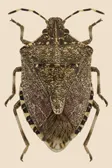
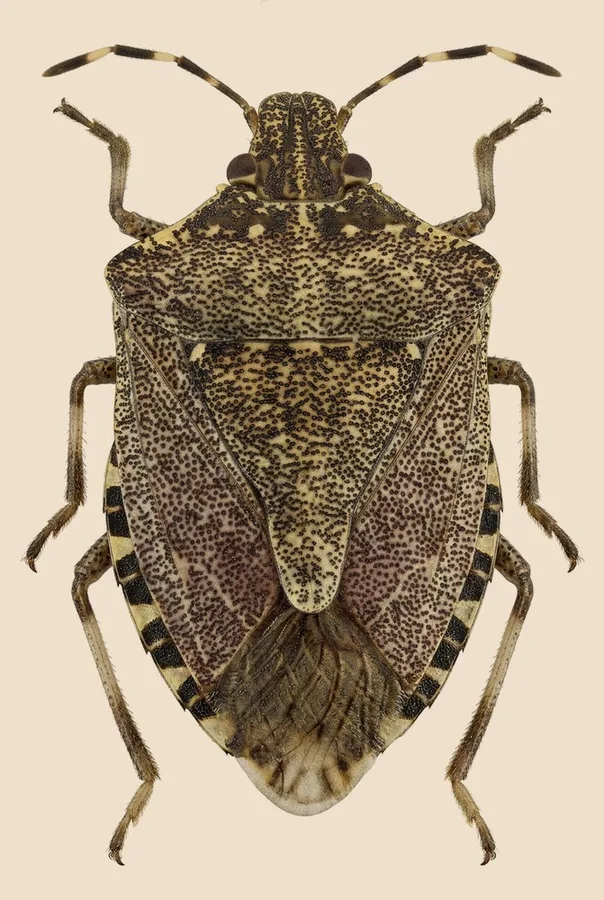
| Brown marmorated stink bug | About 16 mm, marbled brown, banded antennae and abdomen edge | Moves into buildings in autumn, sometimes in thousands |
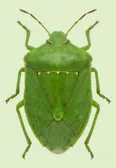
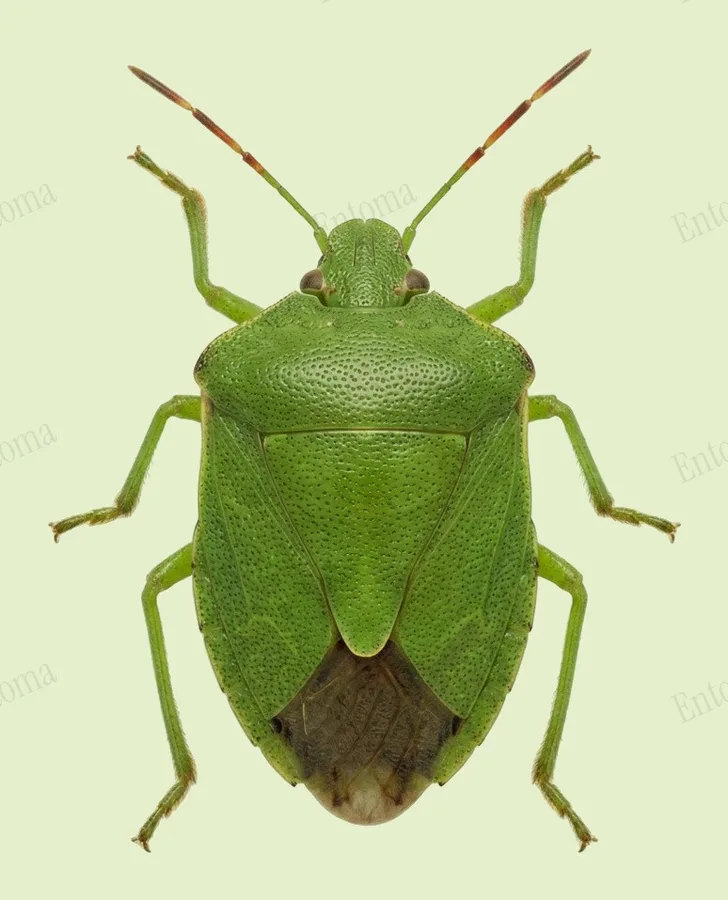
| Green shield bug | Bright green in summer | Turns brown or bronze and overwinters as an adult |
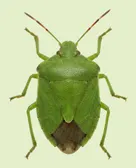
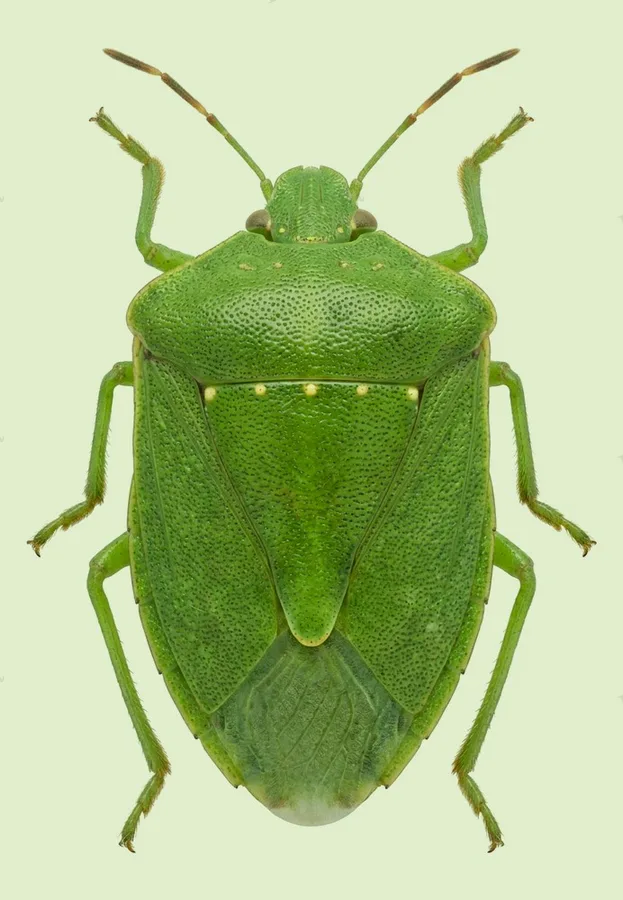
| Southern green stink bug | Bright green, shield shaped, usually three pale dots | Overwinters as an adult; can turn brown, then green again in spring |
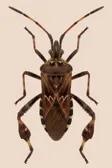
| Western conifer seed bug | About 16 to 19 mm, brownish, flat leaf like hind legs | Comes into buildings from about September |
The brown marmorated stink bug
The brown marmorated stink bug is shield shaped, about 16 mm long and marbled brown, with light and dark bands on the antennae and along the edge of the abdomen. In autumn it moves into buildings to spend the winter, sometimes in the thousands.
When disturbed or crushed it gives off a pungent smell, often compared to cilantro. It is native to Asia and reached North America by accident. It feeds on a very wide range of plants and is a serious pest of fruit and vegetable crops.
Green shield bugs and green stink bugs
The green shield bug is bright green in summer and often turns brown or bronze before spending the winter as an adult. It feeds by sucking plant sap.
The southern green stink bug is bright green and shield shaped, usually with three pale dots. It also spends the winter as an adult, and overwintering adults can turn brown, then green again in spring.
The western conifer seed bug
The western conifer seed bug is a large brownish bug, about 16 to 19 mm long, with flat, leaf like hind legs. It comes into buildings in autumn when the cold weather begins, from about September. It smells unpleasant when handled but poses no threat to human health.
It is native to North America. It was first seen in Europe in 1999 and spread to more than 15 countries within a few years.
What to expect indoors
Stink bugs do not bite people. Those that spend the winter indoors do not breed there: they sit out the winter as adults and leave in spring.