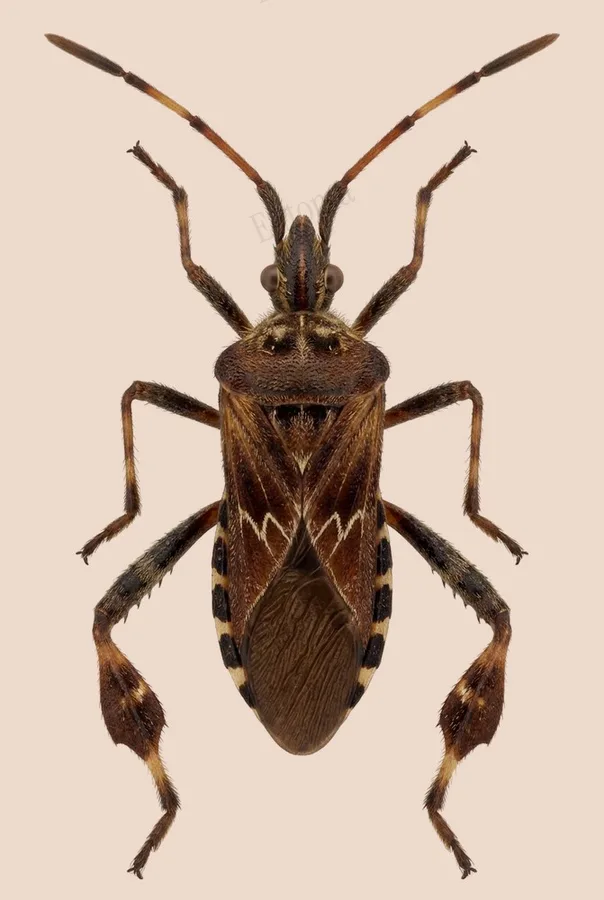
Western conifer seed bug
First recorded in Europe in Italy in 1999, this North American insect spread across most of the continent within about two decades.
| Where | Conifer forests and gardens |
|---|---|
| Size | 15 to 20 mm long |
| When | January to April, July to December |
It is a large reddish-brown bug, 15 to 20 mm long, marked with a pale zigzag line across the closed wings and flattened, leaf-shaped expansions on the hind legs.
Females lay their eggs on conifer foliage in early summer, and outside the breeding season adults often shelter under bark or, in autumn, slip indoors to overwinter in houses.
Traits
Habitat
Woodland
Colour
Brown, Orange, Black
Active
Day
To people
Harmless; may wander indoors to overwinter in autumn
Activity through the year
Often confused with
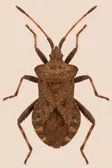
The dock bug is smaller, growing to about 13 to 15 mm, and lacks the flattened, leaf-like expansions on the hind legs seen in the western conifer seed bug.
Questions
Is the Western conifer seed bug dangerous to people?
Harmless; may wander indoors to overwinter in autumn.
When can you see the Western conifer seed bug?
The Western conifer seed bug can be seen from January to April, July to December, by day.
Plate retouched from a photo by Ben Sale from Stevenage, UK, CC BY 2.0, Wikimedia Commons Licence
Report a mistake in this entry
True bugs›Leaf-footed bugs›Leptoglossus
Last updated 2026-09-26. Every entry is checked against published sources.