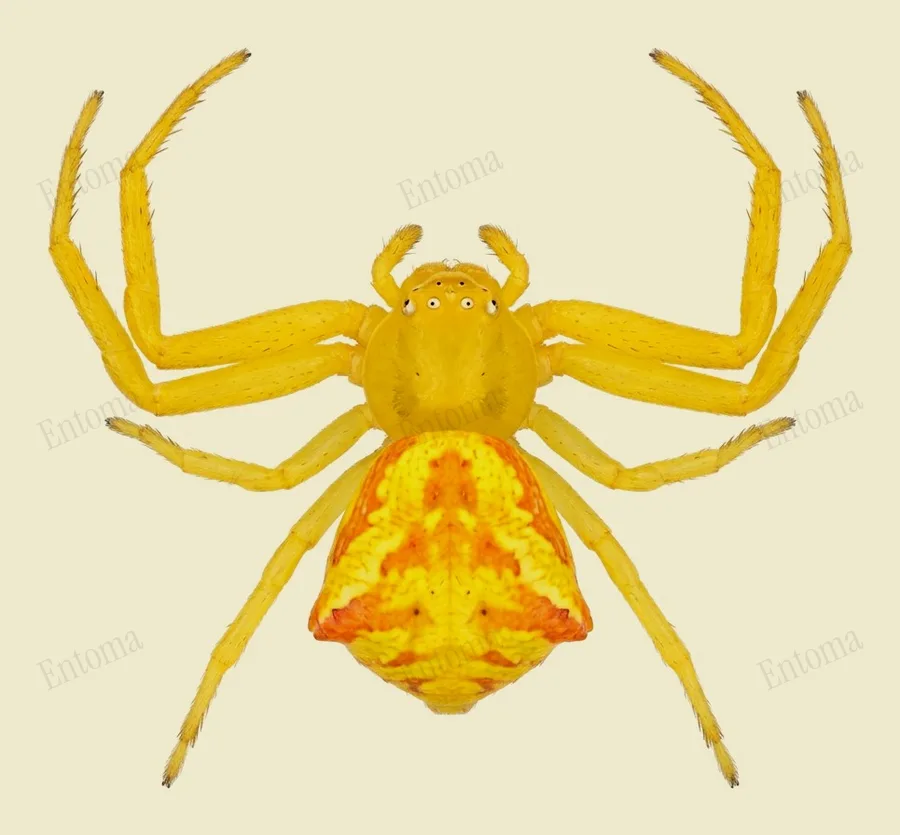
Heather crab spider
Females of this crab spider slowly shift colour between white and yellow to match their flower, while the much smaller males stay plain green or brown for life.
| Where | On flowers in warm heathland |
|---|---|
| Size | Male 2 to 4 mm, female 7 to 11 mm body length |
| When | March to October |
The triangular, forward pointed abdomen and strong colour changing ability set this crab spider apart; females shift between white and yellow over several days to match the flowers they sit on, while males stay small and dull green or brown.
It waits motionless on blossoms in warm, open habitats such as heathland, ambushing bees, butterflies and hoverflies that come to feed, and is most often encountered during the warmer months of the year.
Traits
Habitat
Heath
Colour
White, Yellow, Green
Active
Day
To people
This spider is not dangerous to people; it relies on camouflage rather than defence and has no medically documented bite.
Activity through the year
Often confused with
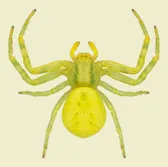
Very similar in habit and colour changing ability, but the goldenrod crab spider has a broad, rounded abdomen rather than the distinctly triangular, forward pointed abdomen of the heather crab spider.
Questions
Is the Heather crab spider dangerous to people?
This spider is not dangerous to people; it relies on camouflage rather than defence and has no medically documented bite.
When can you see the Heather crab spider?
The Heather crab spider can be seen from March to October, by day.
Plate retouched from a museum specimen photo by Staatliche Naturwissenschaftliche Sammlungen Bayerns, CC BY 4.0, GBIF Licence
Report a mistake in this entry
Last updated 2026-09-27. Every entry is checked against published sources.