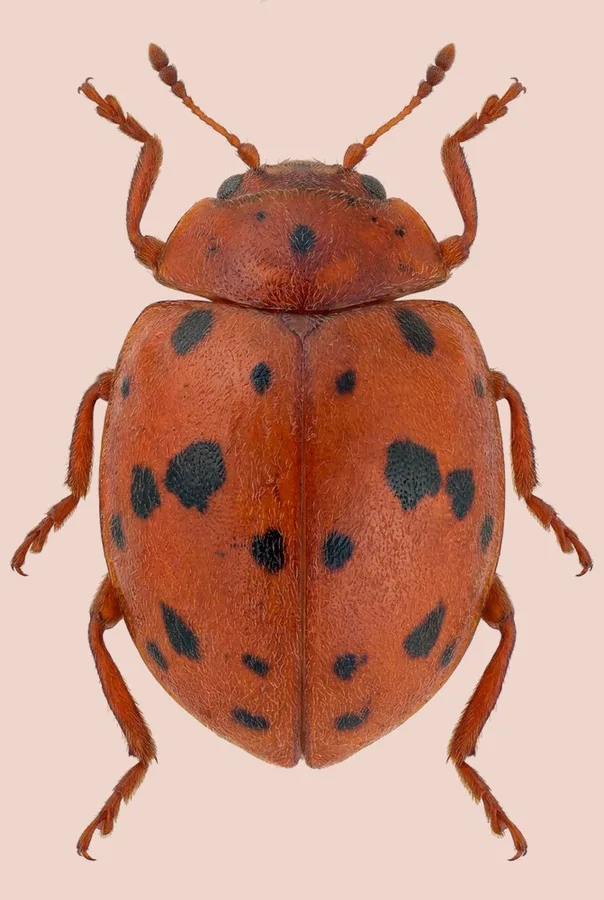
24-spot ladybird
Unlike most ladybirds, this species is a vegetarian that eats grasses and other low plants instead of aphids, and its dull, hairy back helps it hide from predators.
| Where | Rough grassland, meadows and scrub |
|---|---|
| Size | 3 to 4 mm body length |
| When | March to October |
The 24-spot ladybird is a small, matt, orange-red ladybird covered in fine short hairs that give it a dull rather than glossy appearance, with black spots that vary from almost none to two dozen. Its legs and antennae share the same orange-red tone as the body.
It lives in rough grassland, meadows and scrub, feeding on grasses and low growing plants rather than aphids like most other ladybirds. It overwinters as an adult in grass tussocks and low herbage, becoming active again in spring.
Traits
Habitat
Grassland
Colour
Orange
Active
Day
To people
A plant-eating ladybird found in grass and meadows; harmless to handle and not a pest.
Activity through the year
Often confused with
Similar size at about 3 to 4.5 mm, but usually plain ochre brown without spots and with a more strongly domed body.
Questions
Is the 24-spot ladybird dangerous to people?
A plant-eating ladybird found in grass and meadows; harmless to handle and not a pest.
When can you see the 24-spot ladybird?
The 24-spot ladybird can be seen from March to October, by day.
Plate retouched from a photo by Udo Schmidt from Deutschland, CC BY‑SA 2.0, Wikimedia Commons Licence
The plate on this page is shared under the same licence as its source, CC BY-SA.
Report a mistake in this entry
Beetles›Ladybirds›Subcoccinella
Last updated 2026-09-26. Every entry is checked against published sources.