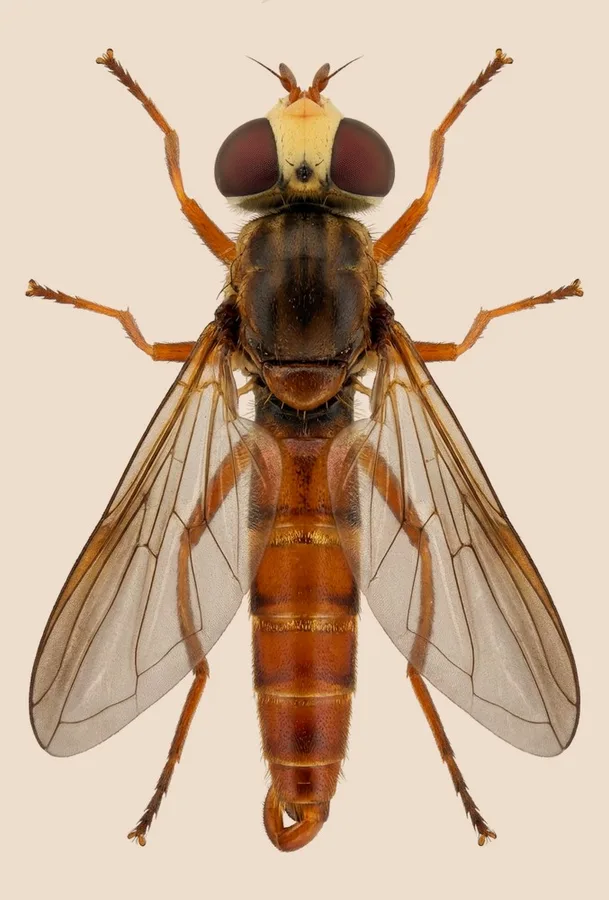
Ferruginous bee-grabber
Female bee-grabbers ambush a bumblebee in midair, then inject a single egg into its body using a hooked tip on the abdomen.
| Where | Flower meadows and hedgerows |
|---|---|
| Size | 8 to 13 mm body length |
| When | May to August |
This fly has a reddish brown to yellow brown body, a large bright yellow head, and reddish eyes, with the long abdomen usually folded forward at rest and the wings tinted reddish yellow at the base.
Adults hover around flowers watching for a passing bumblebee, then dart out to grab one and lay a single egg inside its body using a specialized abdominal hook. The larva feeds inside the bee and eventually kills it.
Traits
Habitat
Grassland
Colour
Brown, Yellow
Active
Day
To people
Harmless to people; it targets bumblebees rather than humans and does not bite or sting.
Activity through the year
Often confused with
Similar size at about 7 to 15 mm, but mostly black with a narrow waisted abdomen, rather than the broader reddish brown body of the Ferruginous bee-grabber.
Questions
Is the Ferruginous bee-grabber dangerous to people?
Harmless to people; it targets bumblebees rather than humans and does not bite or sting.
When can you see the Ferruginous bee-grabber?
The Ferruginous bee-grabber can be seen from May to August, by day.
Plate retouched from a photo by Paul Cook, CC BY 4.0, iNaturalist Licence
Report a mistake in this entry
Flies›Thick-headed flies›Sicus
Last updated 2026-09-26. Every entry is checked against published sources.