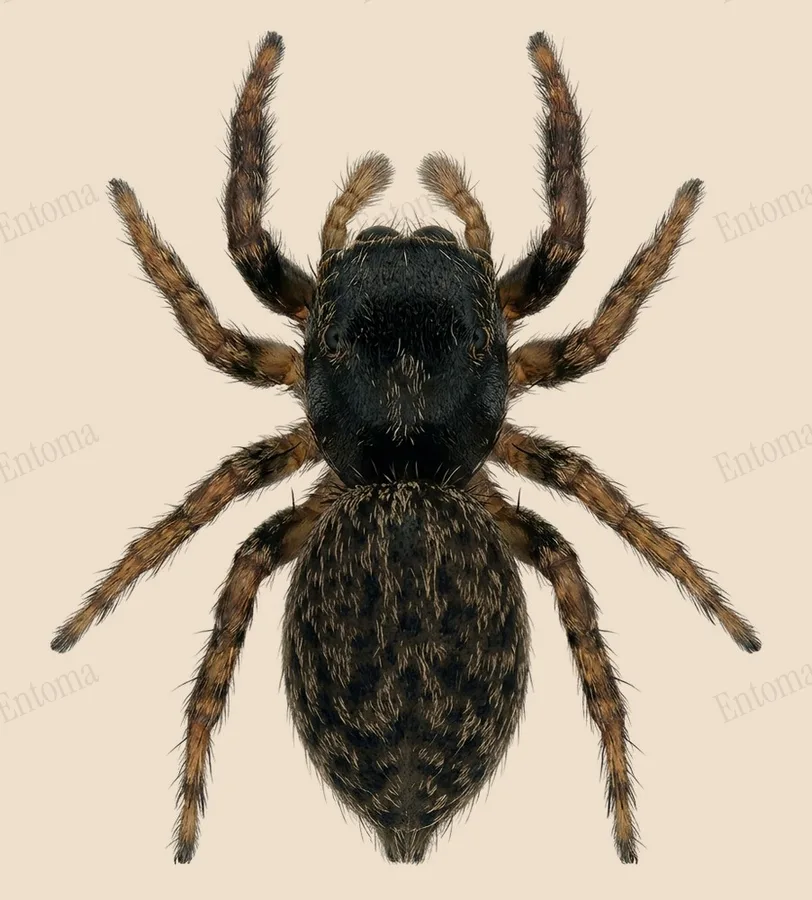
Beardfooted spider
Male beardfooted spiders raise a hugely lengthened, tufted third pair of legs and audibly vibrate them to court females, using limbs built more for display than walking.
| Where | Sunlit walls, rocks and buildings |
|---|---|
| Size | Female 4.6 to 5.7 mm, male 3.8 to 4 mm body length |
| When | March to October |
The Beardfooted spider is one of the most colourful jumping spiders in its range, the male combining a red-marked head, black and white striped legs, and a hugely enlarged, red and black third leg pair tipped with white tufts. Females are plainer, with a dull brown body and pale legs.
Adults hunt by day on sunlit walls, rocks and window ledges, stalking small insects with sharp eyesight before leaping onto them. The male's elaborate leg display and audible vibrations form part of a courtship dance performed in front of a watching female.
Traits
Habitat
Towns
Colour
Brown, Red, Black
Active
Day
To people
Not dangerous to people; often seen basking and hunting in the sun on walls and even indoors.
Activity through the year
Often confused with
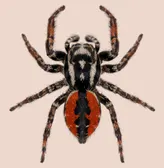
Philaeus chrysops is larger overall, body length about 7 to 12 mm, with a solid red abdomen edged in black, unlike the Beardfooted spider's red head band and greatly lengthened third legs.
Questions
Is the Beardfooted spider dangerous to people?
Not dangerous to people; often seen basking and hunting in the sun on walls and even indoors.
When can you see the Beardfooted spider?
The Beardfooted spider can be seen from March to October, by day.
Plate retouched from a photo by Ludivine Lamare, CC BY 4.0, iNaturalist Licence
Report a mistake in this entry
Spiders›Jumping spiders›Saitis
Last updated 2026-09-27. Every entry is checked against published sources.