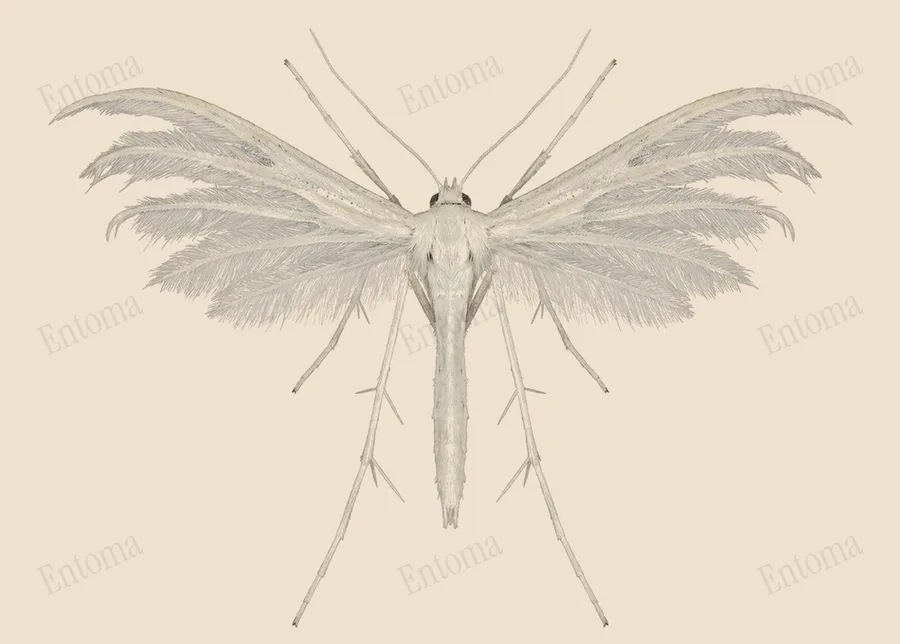
White plume moth
This moth's wings split into five feathery plumes per side, and at rest it folds them into a slender white T that few other moths resemble.
| Where | Dry grassland, waste ground and gardens |
|---|---|
| Size | 26 to 34 mm wingspan |
| When | May to August |
The white plume moth is entirely white with narrow, deeply divided wings, each forewing split into two feathery plumes and each hindwing into three, giving six plume tips overall. At rest it draws these into a slim T shaped outline along a stem, unlike most other moths.
Caterpillars feed on bindweed and overwinter on the host plant before completing growth in spring. Adults fly from dusk in early summer, mainly over dry grassland, waste ground and gardens where bindweed grows.
Traits
Habitat
Grassland
Colour
White
Active
Night
To people
Attracted to light after dark; harmless to people.
Activity through the year
Often confused with
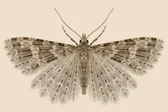
Much smaller at about 14 to 16 mm wingspan, with narrow fan-like plumes marked in a zigzag of white, black and brown rather than plain white.
Questions
Is the White plume moth dangerous to people?
Attracted to light after dark; harmless to people.
When can you see the White plume moth?
The White plume moth can be seen from May to August, at night.
Plate retouched from a photo by Didier Descouens, CC BY‑SA 4.0, Wikimedia Commons Licence
The plate on this page is shared under the same licence as its source, CC BY-SA.
Report a mistake in this entry
Butterflies and moths›Plume moths›Pterophorus
Last updated 2026-09-26. Every entry is checked against published sources.