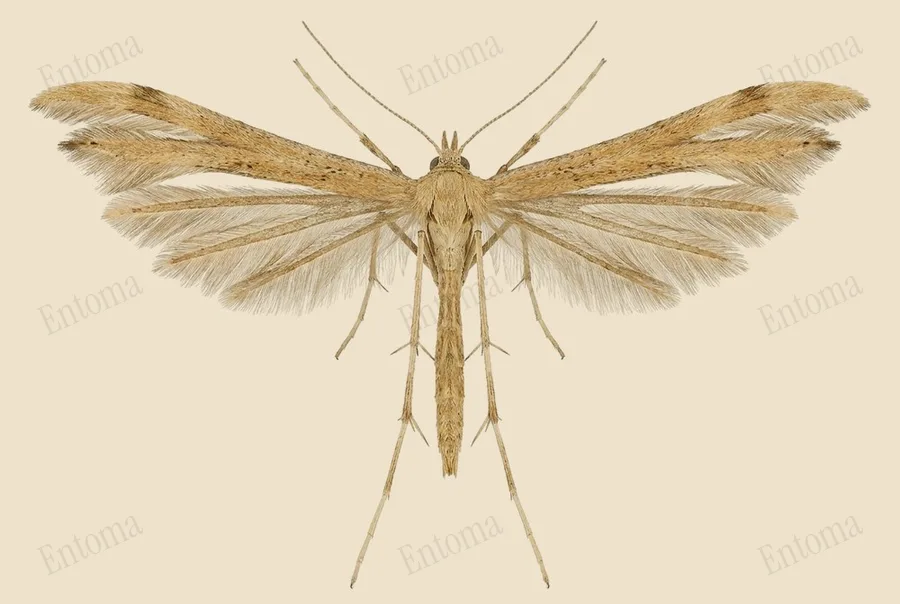
Morning-glory plume moth
It can turn up on the wing in almost any month of the year, including mild spells in the depths of winter, when few other moths fly.
| Where | Gardens, hedgerows, and waste ground |
|---|---|
| Size | 18 to 27 mm wingspan |
| When | March to November |
It is a slender, pale brownish moth that rests with its narrow, feather-edged wings rolled tightly together, so the deep cleft in each wing is easy to miss.
Caterpillars feed on bindweed, and because adults can overwinter and reappear whenever conditions allow, this is one of the few moths recorded on the wing across every month of the year.
Traits
Habitat
Garden
Colour
Brown
Active
Night
To people
Harmless
Activity through the year
Often confused with
Beautiful plume shows a darker, more contrasting pattern with a distinct dark blotch on the forewing, unlike the morning-glory plume moth's plainer, uniformly pale brown wings.
Questions
Is the Morning-glory plume moth dangerous to people?
The Morning-glory plume moth is harmless to people.
When can you see the Morning-glory plume moth?
The Morning-glory plume moth can be seen from March to November, at night.
Plate retouched from a photo by Didier Descouens, CC BY‑SA 4.0, Wikimedia Commons Licence
The plate on this page is shared under the same licence as its source, CC BY-SA.
Report a mistake in this entry
Butterflies and moths›Plume moths›Emmelina
Last updated 2026-09-26. Every entry is checked against published sources.